

Table of Contents
Understanding Steel Loading Ramps for Industrial Use
In today’s fast-paced industrial environments, steel loading ramps play a crucial role in facilitating safe and efficient material handling. These robust platforms bridge the gap between ground level and loading docks, enabling seamless access for forklifts and pallet jacks. At Medlin Ramps, we have over 35 years of experience as the largest yard ramp manufacturer in the U.S., delivering durable solutions that enhance workflow in warehousing and distribution centers.
Steel loading ramps have become indispensable in sectors like logistics, manufacturing, and agribusiness, where high-volume operations demand reliable equipment. Our heavy duty yard ramps, constructed from corrosion-resistant carbon steel, support load capacities up to 40,000 lbs, ensuring stability for demanding tasks. We offer a comprehensive product range, including mobile and stationary options like the Steel Yard Ramp, as well as portable dock ramps for flexible setups. For instance, our solutions support logistics operations at major retailers such as Home Depot by providing quick ground-to-dock transitions. Compliance with OSHA standards, such as 1910.23 requirements for platform stability and load support, underpins our designs to prioritize worker safety and prevent accidents during material handling.
This guide explores the fundamentals of industrial steel ramps, including material differences, capacity specifications, and selection criteria tailored to warehouse needs. We also cover diverse applications, from portable setups to permanent installations, along with our rental and rent-to-own programs for cost-effective access. Whether evaluating durable loading platforms for your facility, discover how these essentials optimize efficiency while meeting safety regulations.
Fundamentals of Steel Loading Ramps
Steel loading ramps serve as essential tools in industrial settings, enabling safe and efficient transfer of goods between ground level and loading docks. At Medlin Ramps, with over 35 years in the material handling industry, we design these ramps to meet the demands of warehousing, manufacturing, and distribution across the United States. Our commitment to excellence ensures that steel loading ramps provide reliable access for forklifts and heavy equipment, enhancing operational flow in facilities from California to North Carolina.
Carbon steel forms the backbone of our steel loading ramps, chosen for its exceptional strength and weldability that allows for robust construction capable of withstanding rigorous daily use. Typical dimensions include lengths from 30 to 46 feet and widths between 72 and 96 inches, accommodating various dock heights and vehicle sizes. Load capacities range from 15,000 to 40,000 pounds, making them suitable for Heavy Duty Steel Yard Ramp applications in high-volume environments.
We offer the Elite Series for premium, customized solutions and the Stock Series for standard, ready-to-ship options, both fabricated in our U.S. facilities to cover the entire USA–one customer at a time. Key specifications include:
- Slope compliance: Designed to meet OSHA guidelines, typically 1:12 ratio for safe forklift operation.
- Surface treatment: Serrated grating for superior traction, reducing slip risks on wet or oily surfaces.
- Portability features: Integrated with wheels or forklift pockets for easy repositioning as portable dock ramps.
These robust steel platforms support heavy duty yard ramps that handle substantial weights, ensuring versatility for mobile steel docks in dynamic industrial layouts.
When selecting loading ramps, material choice significantly impacts performance, longevity, and cost in industrial applications. Steel offers unmatched durability for demanding environments, while aluminum provides advantages in weight-sensitive scenarios. Data drawn from OSHA guidelines on material handling equipment underscores the importance of these attributes for safety and efficiency.
The following table compares key features of steel and aluminum ramps:
| Feature | Steel Ramps | Aluminum Ramps |
|---|---|---|
| Load Capacity | Up to 40,000 lbs; ideal for heavy industrial loads | Typically 10,000-20,000 lbs; better for lighter duties |
| Durability | High resistance to wear, suitable for outdoor use | Lighter but prone to denting under heavy impact |
| Weight | Heavier (portability via wheels or forklifts) | Lighter for easy manual positioning |
| Cost | Lower initial cost with long-term value | Higher upfront but corrosion-resistant |
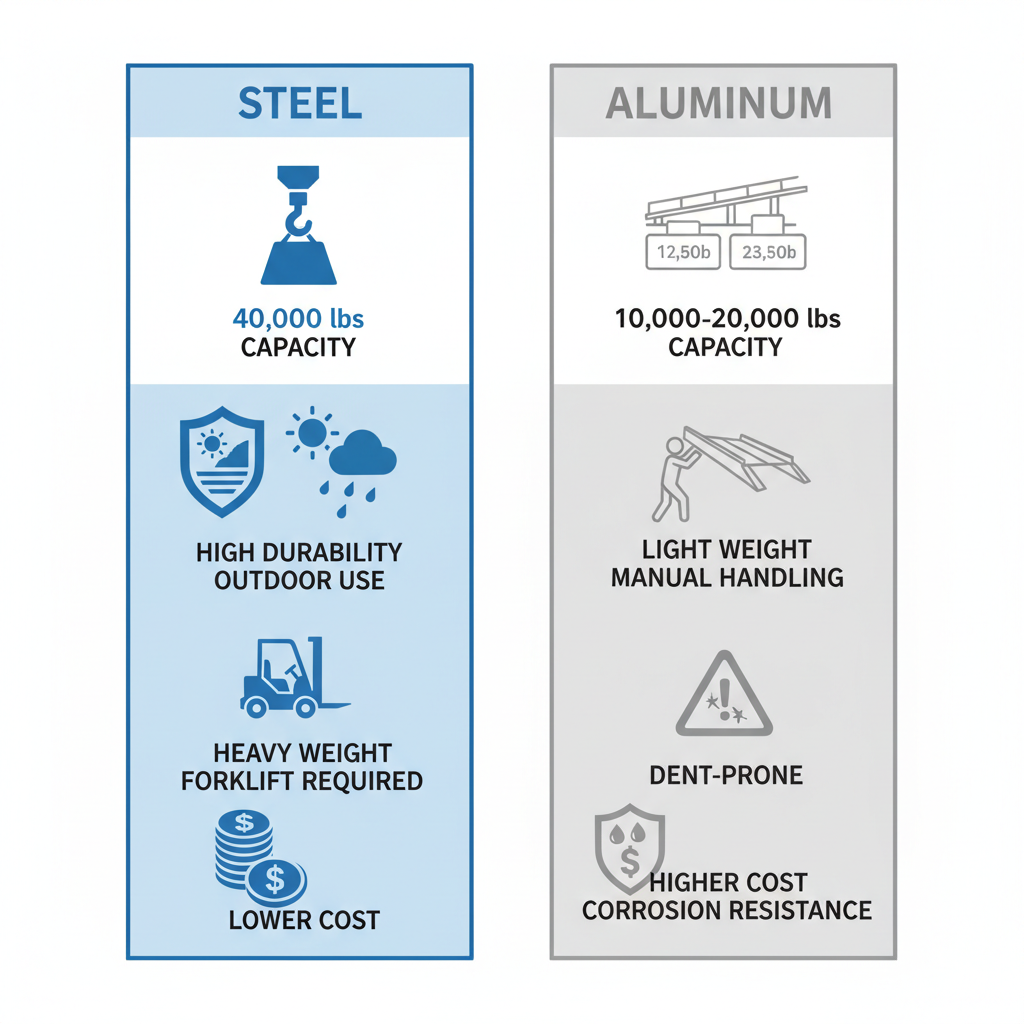
Comparison of steel and aluminum loading ramps capacities and durability
Steel ramps excel in heavy-duty scenarios, aligning with OSHA 1910.25 standards for load-bearing design, where their superior capacity and wear resistance justify the investment for facilities handling robust loads. Aluminum suits lighter, frequent relocations but may require more frequent inspections per OSHA ramps and grades guidelines on traction and slope.
Safety remains paramount in ramp design, incorporating OSHA-compliant features like side guardrails to prevent falls and approach plates for smooth transitions. These elements, validated by OSHA’s stairways and ladders standard, ensure secure operations without exceeding rated capacities–consult us for site-specific requirements. As the largest yard ramp manufacturer in the US, we prioritize these fundamentals to inform advanced customizations in subsequent applications.
Exploring Steel Loading Ramp Applications
Steel loading ramps play a crucial role in modern industrial operations, enabling efficient material handling across diverse environments. From warehouses to manufacturing floors, these robust structures bridge gaps between ground level and loading docks, streamlining the movement of goods. With our 35 years in the Material Handling Industry, we’ve witnessed how steel loading ramps enhance productivity while prioritizing safety and durability. They support heavy loads, integrate seamlessly with existing equipment, and withstand harsh conditions, making them indispensable for businesses seeking reliable access solutions. This section explores their applications in key sectors, highlighting real-world benefits and considerations for implementation.
Warehouse and Distribution Integration
In high-volume warehouse settings, steel loading ramps significantly boost operational efficiency by facilitating smooth transitions for pallet transfers and inventory management. These ramps, often designed as heavy duty yard ramps, provide a stable platform that aligns perfectly with forklift operations, allowing operators to navigate inclines without compromising load stability. For instance, in distribution centers, they enable faster loading and unloading, reducing downtime during peak hours. We’ve seen this firsthand in facilities similar to those operated by clients like Amazon, where ramps optimize space by eliminating the need for permanent dock modifications.
Forklift compatibility is a standout feature, with non-slip surfaces and reinforced edges ensuring safe pallet handling even under heavy weights. Steel loading ramps also excel in space optimization, fitting into tight areas where traditional docks fall short. Their environmental resilience makes them suitable for outdoor use on uneven terrain, preventing disruptions from weather or ground shifts. In our multi-facility network across the U.S., we ensure quick delivery of these solutions, helping warehouses maintain continuous workflow.
When selecting ramps for warehouse integration, facility needs dictate whether mobile or stationary options best suit the operation. Mobile variants offer flexibility for multi-door setups, while stationary ones provide enduring access for fixed points. The following table compares key aspects of these ramp types in industrial environments:
| Aspect | Mobile Ramps | Stationary Ramps |
|---|---|---|
| Mobility | Portable with wheels; easy relocation | Fixed installation; permanent access |
| Installation Time | Quick setup (hours) | Requires concrete anchoring (days) |
| Cost Efficiency | Rental options available | Long-term investment |
| Use Cases | Temporary or multi-door facilities | Dedicated dock areas |
Based on OSHA loading dock guidelines, both types enhance safety when properly maintained, but mobile ramps favor flexibility in dynamic warehouse layouts. Their portability allows quick repositioning, minimizing setup interruptions and supporting varied loading scenarios. This analysis underscores mobile ramps’ advantages for warehouses needing adaptability, as they align with OSHA recommendations for secure dock-ramp interfaces without extensive infrastructure changes.
Benefits for Manufacturing and Logistics
Steel loading ramps offer substantial advantages in manufacturing and logistics hubs, where they handle palletized goods and heavy machinery with precision. In manufacturing floors, industrial access ramps serve as vital connectors, enabling forklifts to transport components from ground storage to elevated assembly lines. This setup reduces manual lifting risks and accelerates production cycles, particularly for bulky items like engine parts or raw materials. We’ve integrated such solutions in logistics operations, observing improved throughput in environments with fluctuating demand.
For heavy machinery loading, portable dock ramps provide versatile access, bridging height differences in shipping yards or construction-adjacent sites. Their steel construction endures impacts and corrosion, ideal for outdoor logistics where exposure to elements is common. In one case, a manufacturing client utilized our stock series yard ramps to streamline palletized goods movement, cutting loading times by adapting to uneven terrain without custom builds. These ramps support capacities up to industry standards, ensuring safe transfer of equipment like generators or tooling.
Logistics benefits extend to multi-modal transport hubs, where steel bridge platforms facilitate seamless shifts between trucks and rail systems. By optimizing load handling, they minimize bottlenecks, enhancing overall supply chain efficiency. Our commitment to excellence, serving the USA one customer at a time, includes customizing ramps for specific logistics needs, such as integrating with guard rails for added protection. Following manufacturer instructions and OSHA e-tool guidelines for dock interfaces is essential, as results depend on site-specific applications. Do not exceed rated capacities–consult us for load and installation requirements. In varied conditions, these ramps prove resilient, supporting diverse operations from agribusiness to retail distribution.
Through these applications, steel loading ramps demonstrate versatility, paving the way for practical selection and maintenance strategies in real-world use.
Practical Considerations for Steel Loading Ramps
When implementing steel loading ramps in warehouse environments, several practical factors come into play to ensure seamless operations and long-term reliability. We recommend evaluating site-specific needs to select the right ramp, whether for temporary or permanent use. This section covers selection criteria, rental options, and essential installation and maintenance practices, drawing on industry standards for safety and efficiency.
Selection and Rental Options
Choosing the appropriate steel loading ramps begins with assessing key factors such as site grade, traffic volume, and the type of forklift in use. For instance, uneven terrain may require adjustable heavy duty yard ramps to maintain level access, while high-traffic areas demand robust designs capable of handling frequent loads up to 20,000 pounds or more. Compatibility with heavy machinery ensures smooth transitions from ground to dock, minimizing downtime and enhancing workflow in distribution centers.
Financial considerations often guide whether to rent or purchase. Renting offers flexibility for seasonal demands or testing setups, while buying suits ongoing operations. We provide short-term rental options through our distribution centers across the U.S., including California, New Mexico, North Carolina, and Florida, allowing quick delivery for projects.
The following table outlines the pros, cons, and ideal scenarios for each acquisition method, informed by OSHA interpretations on equipment leasing to support compliant decision-making.
| Option | Pros | Cons | Best For |
|---|---|---|---|
| Rental | Low upfront cost; flexibility for projects | Ongoing fees; limited customization | Short-term or testing needs |
| Purchase | Ownership; full customization | Higher initial investment | Long-term, permanent use |
| Rent-to-Own | Builds equity; trial period | Longer commitment required | Uncertain long-term needs |
This comparison highlights how rental aligns with transient needs, such as construction sites or peak shipping periods, where portability reduces logistical hassles. Purchasing, on the other hand, allows for tailored features like non-slip surfaces or extended lengths, ideal for fixed warehouse docks. Our rent-to-own programs bridge the gap, enabling businesses to apply rental payments toward ownership while evaluating performance in real-world conditions. For those exploring options, our loading dock ramps guide offers detailed insights into portable dock ramps suitable for ground access.
Beyond cost, consider where to buy heavy duty yard ramps in the U.S. Our multiple facilities ensure competitive pricing and rapid shipping, with options for portable dock ramps that support short-term rentals starting at weekly rates. These practical steel solutions accommodate various dock access systems, from mobile units for yard maneuvering to stationary setups for high-volume loading.
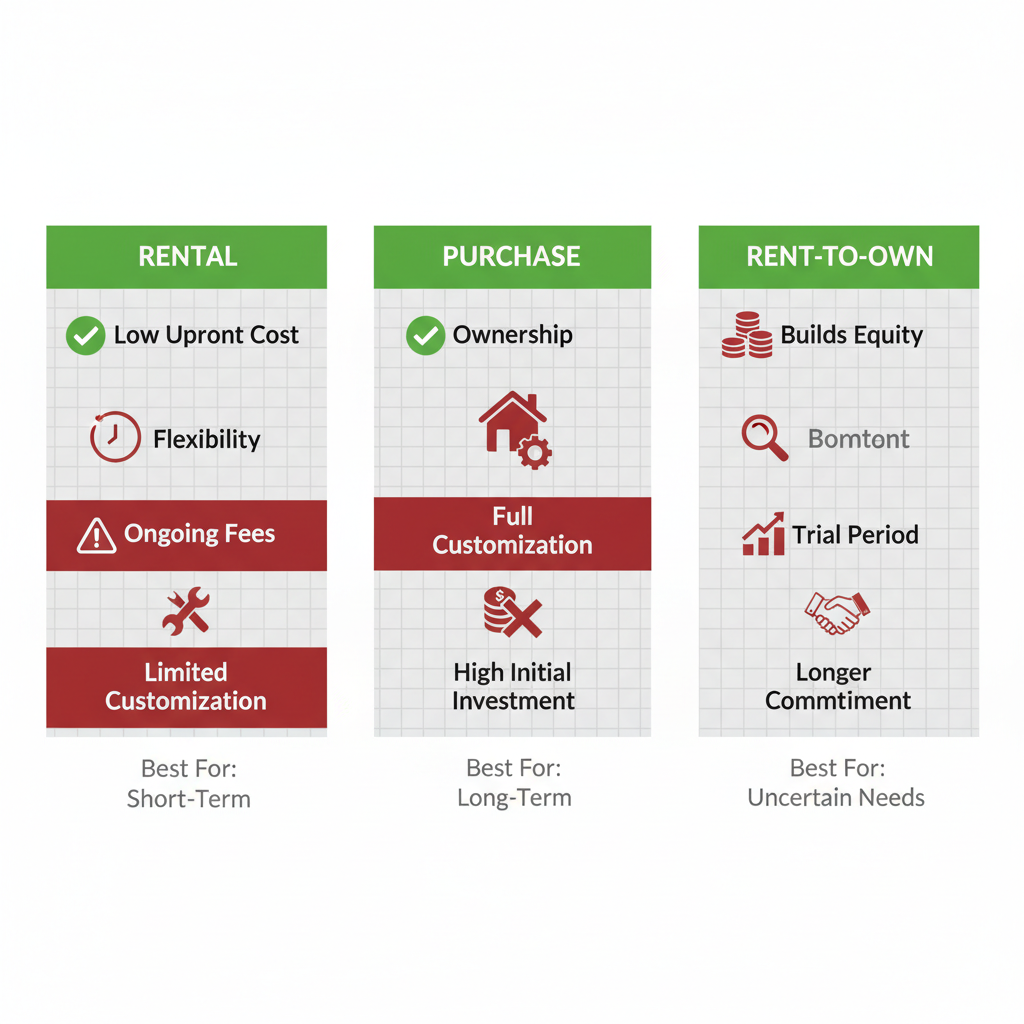
Comparison of steel ramp acquisition options: rental, purchase, rent-to-own.
Visual aids like this infographic reinforce the trade-offs, emphasizing how rental can test compatibility with site conditions before committing to a purchase. Businesses with fluctuating demands benefit from our flexible terms, which include delivery and pickup logistics to streamline short-term projects.
Installation and Maintenance Best Practices
Proper installation of steel loading ramps is crucial for safety and functionality, particularly in dynamic warehouse settings. We advise beginning with a site survey to confirm the ramp aligns with the dock height and ground level. Secure anchoring prevents shifting under load, while precise alignment ensures even weight distribution for forklifts.
Follow these step-by-step guidelines for installation:
- Position the ramp flush against the dock edge, using shims if needed for grade adjustments.
- Anchor using provided bolts or weld points into concrete, adhering to local building codes.
- Test the ramp’s stability by applying incremental loads, verifying no deflection exceeds manufacturer tolerances.
- Install safety features like wheel chocks and warning signage to comply with access protocols.
OSHA’s 2012 standard interpretations emphasize fall protection for ramps exceeding six feet in height, recommending guardrails or barriers to safeguard workers during loading operations. This guidance reinforces the need for qualified personnel to handle setup, avoiding common pitfalls like improper leveling that could lead to accidents.
Maintenance routines extend the lifespan of these dock access systems, especially for outdoor applications exposed to weather. Conduct daily visual inspections for cracks or corrosion, focusing on high-wear areas like the crank mechanism and deck plating. Lubricate moving parts, such as the two-speed manual crank, monthly to ensure smooth height adjustments.
Incorporate these best practices into a scheduled checklist:
- Weekly: Check for loose fasteners and clean debris from the surface to prevent slippage.
- Monthly: Inspect welds and apply protective coatings to combat rust in humid environments.
- Annually: Perform a professional load test, consulting our service teams for comprehensive evaluations.
For heavy machinery compatibility, verify that portable dock ramps withstand dynamic loads from forklifts, adjusting as needed for traffic volume. We recommend avoiding overloads beyond rated capacities and following manufacturer instructions for all repairs. These steps not only promote longevity but also align with OSHA rules on equipment handling, ensuring safe, efficient use over time. For complex custom needs, such as integrated safety rails or specialized coatings, consult our experts to go beyond these basics.
Advanced Steel Loading Ramp Solutions
When industrial operations demand more than standard access solutions, our advanced steel loading ramps provide engineered precision for complex environments. We specialize in customization that addresses unique site challenges, such as varying elevations or high-traffic demands in warehousing and manufacturing. Drawing from 35 years in the material handling industry, our teams engineer steel loading ramps to integrate seamlessly with existing infrastructure, ensuring compliance with safety standards like those outlined in OSHA guidelines for ramps and grades.
Customization begins with a detailed assessment of your facility’s specifications. For instance, if ground-to-dock access requires specific slopes to avoid excessive inclines, we calculate angles based on load capacities and forklift maneuvers, adhering to OSHA’s recommended maximum grades of 10-12% for safe operation. Our design process incorporates advanced features, including 2-speed manual cranks for effortless positioning and extended guardrails to enhance fall protection. These engineered steel access solutions are fabricated from heavy-duty carbon steel, offering superior durability for heavy duty yard ramps that support capacities up to 30,000 pounds (see choosing loading dock ramps). With manufacturing centers in California, New Mexico, North Carolina, and Florida, we streamline delivery, reducing lead times for custom builds compared to single-location providers.
For sites needing tailored adaptability, custom ramps outperform stock options. The following table compares key features:
| Feature | Stock Ramps | Custom Ramps |
|---|---|---|
| Lead Time | Immediate availability | 4-6 weeks for build |
| Adaptability | Standard sizes and capacities | Tailored to site specs |
| Cost | Lower base price | Higher due to engineering |
| Applications | General warehouse use | Unique dock configurations |
Derived from OSHA dock safety standards, this comparison highlights how custom ramps excel in specialized applications, such as irregular dock heights or confined spaces. Choose stock ramps for straightforward, budget-conscious setups where versatility is secondary. Opt for customs when precision engineering ensures long-term efficiency and safety–always consult our experts for site-specific validation, as results depend on application details.
Integrating ramps with portable docks creates versatile portable dock ramps for ground-to-dock access. Our ramp-and-dock combos combine mobile yard ramps with stationary portable docks, allowing forklift operators to load trailers without permanent modifications. These specialized ramp systems differ from fixed installations: portables offer mobility for temporary sites, while fixed provide permanent stability. Made from robust carbon steel, they withstand harsh conditions in distribution centers or construction yards.
Pricing for advanced features starts at $10,000, influenced by capacity, length, and add-ons like anti-slip surfaces. Our rent-to-own programs make these investments accessible, covering the entire USA one customer at a time.
Frequently Asked Questions on Steel Loading Ramps
What are the typical load capacities for heavy duty yard ramps?
Heavy duty yard ramps typically support 15,000 to 40,000 lbs, depending on the model. We advise selecting based on your forklift and load requirements to ensure safety and performance.
How should I maintain portable dock ramps?
Quarterly inspections and rust prevention coatings are key, as per OSHA loading docks e-tool protocols. We recommend regular cleaning and lubrication to extend lifespan and comply with safety standards.
Can I rent portable dock ramps, and for how long?
Yes, rentals range from days to years, with flexible options like rent-to-own. Portable loading ramps benefits include cost savings for short-term needs across the US.
Are heavy duty yard ramps suitable for outdoor use?
Absolutely, with galvanized or epoxy coatings to resist weather. We have 35 years in the Material Handling Industry, ensuring durable designs for various environments.
Are steel loading ramps compatible with forklifts?
Yes, they are ideal for grades under 10% to prevent tipping. Always verify compatibility for safe ground-to-dock access.
Why prefer steel for loading ramps over other materials?
Steel offers superior strength for heavy-duty applications, outperforming aluminum in longevity under intense use.
How do portable steel loading ramps differ from fixed ramps?
Portable versions provide mobility and quick setup, unlike permanent fixed ramps, offering flexibility for dynamic logistics needs.
Optimizing Your Operations with Steel Loading Ramps
In summary, steel loading ramps provide durable, high-capacity solutions for seamless loading operations, built from robust materials that ensure long-term reliability and safety compliance with standards like OSHA 1910.23.
Key takeaways include the versatility of heavy duty yard ramps for warehouse efficiency and portable dock ramps for flexible access, offering customized options to match your specific needs. These efficient ramp solutions boost productivity while prioritizing worker safety.
As we cover the entire USA with our rental and support services, we’re here to help you evaluate your operations and select the ideal ramp. Contact us today to optimize your workflow.