

Table of Contents
Understanding Portable Forklift Ramps
In today’s fast-paced warehousing and industrial environments, a Portable Forklift Ramp serves as a vital tool for efficient material handling. These movable loading ramps enable forklifts to bridge height differences between ground level and truck beds or elevated surfaces, facilitating safe and seamless loading and unloading operations without the need for permanent dock infrastructure. By providing reliable access, they help streamline workflows in facilities across the United States.
Portable forklift ramps find essential applications in dynamic settings such as temporary construction sites, distribution centers, and manufacturing plants lacking fixed loading docks. Commonly known as yard ramps or mobile yard ramps, they support standard forklifts in transporting heavy loads efficiently, reducing the time spent on manual adjustments and minimizing operational downtime. Key benefits include enhanced workflow efficiency, improved worker safety through stable inclines, and versatility across varying terrains. According to MHI Industry Groups guidelines, adhering to safe ramp usage standards ensures these transportable forklift access platforms meet industry benchmarks for load capacities and stability, preventing accidents during high-volume operations.
At Medlin Ramps, we bring over 35 years in the material handling industry to deliver durable, high-capacity solutions crafted from heavy-duty carbon steel for long-lasting performance. With multiple manufacturing and distribution facilities throughout the U.S., we offer faster delivery and personalized service to commercial buyers in warehousing, distribution, and manufacturing. Our commitment to excellence includes customization options tailored to specific site needs, covering the entire USA one customer at a time.
This guide explores the fundamentals of portable forklift ramps, their benefits, cost considerations, rental options, and capacity selections to help you choose the right Forklift Loading Ramps for your operations.
Fundamentals of Portable Forklift Ramps
At Medlin Ramps, we specialize in innovative solutions for material handling, and our portable forklift ramps stand out for their versatility in warehouse and distribution environments. A Portable Forklift Ramp serves as a critical tool for bridging height differences between ground level and truck beds or elevated docks, enabling efficient loading and unloading without permanent infrastructure. These movable loading platforms enhance operational flexibility, allowing businesses to adapt quickly to varying loading needs across facilities.
The design of a portable forklift ramp begins with a robust inclined steel platform that provides a stable transition for forklifts. Key components include a traction surface to prevent slippage during transit, a hitch mechanism for easy towing by forklift or vehicle, and adjustable support legs that ensure level positioning on uneven terrain. We engineer these elements to withstand rigorous industrial use, with the platform typically spanning 10 to 15 feet in usable width to accommodate standard forklift widths. This structure allows seamless access to trailers, reducing downtime and improving safety in dynamic loading scenarios.
One of the primary advantages of portable ramps lies in their contrast to more rigid alternatives. Portable ramps offer unmatched mobility for operations requiring frequent repositioning, such as in multi-bay truck yards or temporary setups. In contrast, stationary options demand fixed installations that limit adaptability.
| Feature | Portable Ramps | Stationary Ramps |
|---|---|---|
| Mobility | Easily movable with forklift towing | Fixed in place |
| Installation | No permanent setup required | Requires concrete foundation |
Data for this comparison draws from OSHA guidelines on material handling equipment, which stress the importance of stability and ease of use in forklift operations. Portable ramps excel in scenarios where space constraints or workflow changes demand quick adjustments, making them ideal for growing distribution centers. Stationary ramps, while durable for high-volume fixed docks, involve more planning and expense, suiting permanent warehouse configurations.
Emphasizing portability aligns with flexible warehouse needs, as these ramps can be relocated without specialized tools, saving time and resources. For instance, in manufacturing settings, they facilitate access to rail cars or open trailers, boosting overall efficiency.
Our Elite and Stock Series exemplify these principles, featuring heavy-duty carbon steel construction for superior strength and corrosion resistance. A mobile yard ramp in our lineup uses weld-free designs to minimize maintenance, paired with a 2-speed crank system for effortless height adjustments from 36 to 60 inches. These materials ensure longevity, with galvanized coatings protecting against harsh outdoor conditions common in logistics yards.
When selecting capacities, consider a yard ramp rated from 10,000 to 30,000 pounds to match your forklift’s load requirements, preventing overload risks. We recommend consulting site-specific factors to ensure compatibility.
Safety remains paramount in our designs, adhering to OSHA standards for powered industrial trucks and ramp stability. Essential features include:
- Anti-slip surfaces with serrated steel grating to grip tires under wet or oily conditions
- Raised side curbs, typically 4-6 inches high, to guide forklifts and prevent edge falls
- Clear load rating markings compliant with OSHA 1910.178, visible for operator reference
These elements reduce maneuvering hazards, as outlined in OSHA’s guidelines on forklift travel and stability. We design our ramps to meet these standards rigorously, incorporating tow hitches that secure positioning during use.
A transportable access ramp like ours provides a practical alternative to fixed docks, offering the freedom to optimize loading zones on demand. With 35 years in the Material Handling Industry, we cover the entire USA, one customer at a time, delivering solutions that prioritize durability and ease of use.
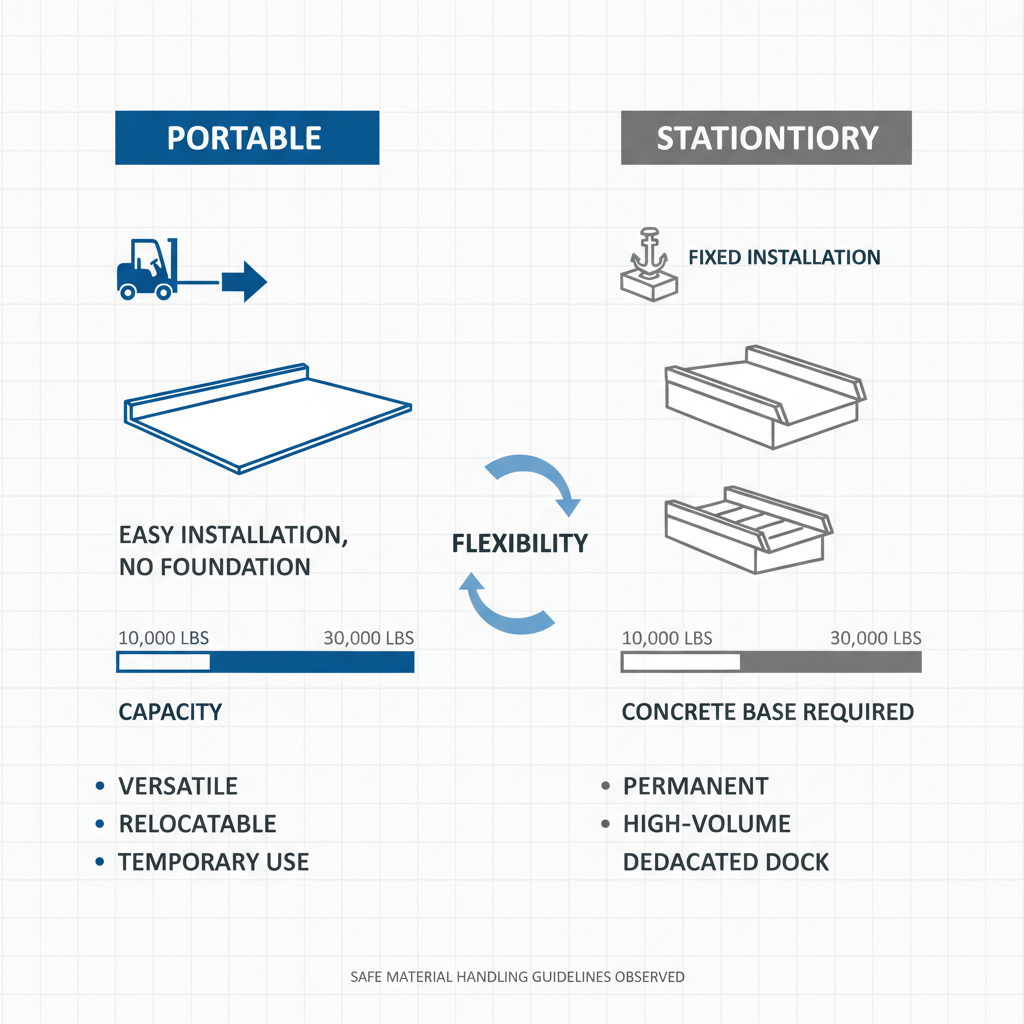
Side-by-side comparison of portable and stationary forklift ramps highlighting mobility and installation differences
This visual underscores how Forklift Ramp innovations support safer, more efficient industrial workflows. Do not exceed rated capacities–consult the manufacturer for site-specific load and installation requirements.
Exploring Portable Forklift Ramp Applications
Portable forklift ramps play a vital role in modern material handling, offering versatile solutions for loading and unloading in various industrial settings. At Medlin Ramps, with over 35 years in the Material Handling Industry, we specialize in designing these ramps to optimize operations across warehouses and distribution centers. This deep dive examines their practical applications, capacity options, and safety considerations, drawing on industry insights to highlight their value.
Warehouse Efficiency with Portable Ramps
In dynamic warehouse environments, portable forklift ramps significantly enhance loading processes by bridging the gap between ground level and truck beds or docks. These ramps integrate seamlessly with forklifts, allowing operators to drive up inclines and transport pallets efficiently without the need for permanent infrastructure. For instance, in high-volume facilities like those used by Amazon logistics, a forklift ramps material handling solution reduces forklift travel time by up to 30 percent, according to material handling efficiency metrics from industry groups.
Workflow improvements become evident as these ramps enable quicker turnaround times for incoming and outgoing shipments. Workers can load or unload trucks in minutes rather than hours, minimizing downtime and boosting overall productivity. Our portable designs support towing with standard forklifts, making them ideal for relocatable loading inclines in expanding operations. By optimizing space and reducing congestion around loading areas, these ramps contribute to smoother daily workflows, ensuring that teams focus on core tasks rather than logistical hurdles.
The following table compares mobile yard ramps against fixed docks, contextualizing their role in warehouse scenarios where flexibility is key for adapting to varying shipment volumes and temporary setups.
| Aspect | Mobile Yard Ramp | Fixed Dock |
|---|---|---|
| Setup Cost | $5,000-$15,000 | $20,000+ |
| Flexibility | High – relocatable | Low – permanent |
Based on industry averages from MHI reports, mobile yard ramps offer substantial cost savings for temporary sites, with lower initial investments and easier relocation compared to fixed installations. We recommend these for operations requiring adaptability, such as seasonal distribution peaks, while fixed docks suit high-traffic permanent facilities. This comparison underscores how choosing the right solution aligns with specific site needs, potentially lowering long-term expenses through reduced downtime.
Capacity and Customization Options
Selecting the appropriate capacity for a portable forklift ramp involves evaluating load requirements, typically ranging from 12,000 to 25,000 lbs, influenced by factors like incline angle and forklift type. Our Elite Series, for example, supports up to 25,000 lbs with a gentle 12-degree incline for safe maneuvering, while the Stock Series handles 16,000 lbs for standard applications. Materials play a crucial role; carbon steel provides superior durability for heavy-duty use, whereas aluminum offers lighter weight for frequent relocation without sacrificing strength.
Customization enhances these options to match industrial needs, including features like serrated grating for traction or integrated mobility aids such as hitch pins for towing. At Medlin Ramps, we offer custom combos that combine ramps with portable docks, tailored for unique layouts in manufacturing or agribusiness. Rental programs provide flexibility, allowing businesses to test configurations before committing to purchases. Incorporating a yard ramp into your setup ensures it aligns with operational demands, such as handling oversized loads in recycling facilities.
Safety and Maintenance Best Practices
Ensuring safety with mobile yard ramps begins with proper setup, including securing the ramp using built-in safety chains and positioning it on level ground to prevent shifts during use. Operators should always wear appropriate PPE and follow protocols like signaling before forklift ascent, reducing accident risks in busy yards. Mobile yard ramps incorporate features such as anti-slip surfaces to enhance traction, but regular inspections for wear are essential.
Routine maintenance involves cleaning debris from the surface, lubricating moving parts like the height-adjustment crank, and checking for structural integrity annually. We advise scheduling professional inspections to maintain long-term reliability, especially after heavy use. Adhering to these practices not only complies with industry standards but also extends the ramp’s lifespan, supporting safe operations across our nationwide service areas.
Implementing Portable Forklift Ramps in Operations
At Medlin Ramps, we understand the challenges of optimizing material handling in dynamic industrial environments. Our portable forklift ramps provide flexible solutions for loading and unloading, enhancing safety and efficiency across U.S. facilities. This section guides you through selecting the right ramp, evaluating costs, and applying them in real scenarios to streamline your operations.
Selection and Installation Guide
Selecting the appropriate portable dock ramps warehouse begins with a thorough site assessment. Evaluate the height difference between ground and dock levels, typically ranging from 36 to 60 inches, and consider your forklift’s specifications, such as wheelbase and load capacity up to 20,000 pounds. We recommend checking traffic volume to ensure the ramp withstands daily usage without compromising stability. For compatibility, match the ramp’s weight capacity and surface traction to your equipment–opt for serrated steel grates to prevent slips in wet conditions.
Here’s a checklist for effective selection:
- Measure dock height and incline angle (ideally 12-16 degrees for safe forklift travel).
- Verify forklift type and maximum load to align with ramp ratings.
- Assess site surface for secure placement, avoiding uneven terrain.
Installation is straightforward and aligns with OSHA guidelines for safe maneuvering. Position the ramp flush against the dock edge, using built-in leveling legs or shims for adjustment. Secure it with wheel chocks or safety chains to prevent movement, and test the setup by slowly driving the forklift up the ramp at reduced speed. For towing between sites, attach to a vehicle hitch following manufacturer towing protocols to maintain control during transport. Always conduct a pre-use inspection for wear and ensure operators are trained on proper ascent and descent techniques.
The following table compares portable ramps to fixed alternatives, highlighting key operational factors:
| Feature | Elite Series | Stock Series |
|---|---|---|
| Crank System | 2-speed manual | Standard single-speed |
| Customization | High – built-to-order | Limited to stock |
Portable options offer superior adaptability, reducing downtime as per OSHA’s emphasis on efficient truck maneuvering. This flexibility makes them ideal for evolving warehouse layouts.
Cost and Rental Considerations
Investing in a yard ramp involves balancing initial expenses with long-term value. Purchase prices for durable models range from $6,000 to $18,000, depending on capacity and features like our mobile yard ramps stock series, which include a 2-speed manual crank for easy height adjustment. These costs cover heavy-duty construction designed for frequent use in manufacturing and distribution.
Rental provides a practical loading solution for seasonal or project-based needs. Short-term rentals start at around $500 per month, while long-term agreements or rent-to-own programs lower effective costs over time. We offer flexible terms through our nationwide distribution network, ensuring quick delivery to sites across the U.S. Return on investment comes from reduced labor and injury risks–operators spend less time bridging gaps, boosting throughput by minimizing wait times at loading areas.
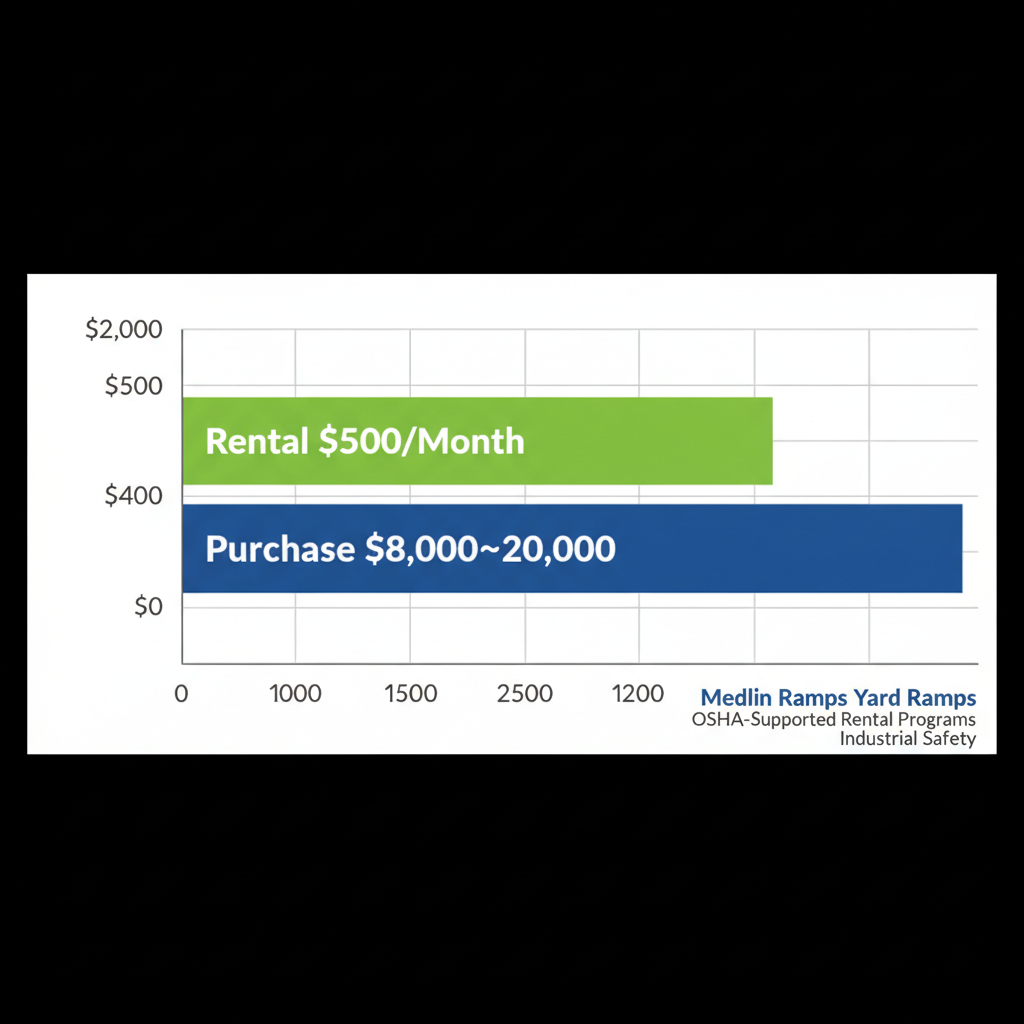
Cost comparison of renting versus buying yard ramps for operations
Financing and rental terms are subject to approval; contact our sales team for details. Emphasizing durability, our ramps feature reinforced steel to handle industrial access demands reliably.
Real-World Use Cases
In warehousing, a mobile yard ramp transforms outdoor staging areas into efficient loading zones. For instance, a retail logistics firm in Texas integrated these ramps to handle truck deliveries without fixed docks, cutting unloading time by streamlining forklift access during peak seasons.
Manufacturing scenarios showcase their versatility. A North Carolina facility used portable units for just-in-time inventory moves, adjusting heights quickly to accommodate varying trailer levels and reducing forklift maneuvering risks as outlined in OSHA protocols.
These examples demonstrate how yard ramps enhance safety and productivity. Operators report fewer incidents when using stable, adjustable platforms, aligning with our commitment to serving U.S. customers one at a time over 35 years in the material handling industry.
For troubleshooting, monitor for uneven settling and re-secure as needed. Consult qualified technicians for repairs, and never exceed rated capacities–always follow safety procedures.
Advanced Features and Custom Solutions
In demanding industrial settings, advanced features elevate the performance of portable forklift ramps beyond basic functionality. Our engineering team at Medlin Ramps focuses on innovations that enhance safety, efficiency, and adaptability for high-volume operations. These sophisticated options allow businesses in warehousing, manufacturing, and logistics to optimize material handling processes while adhering to stringent industry standards.
Customization stands as a cornerstone of our advanced offerings, enabling tailored solutions for unique site requirements. We craft custom forklift inclines with extended platforms or integrated hydraulic assists to streamline loading in confined spaces. For instance, a Portable Forklift Ramp can be built-to-order with adjustable heights up to 10 feet, ensuring seamless integration into existing workflows. This flexibility proves essential for operations handling oversized cargo, where standard designs fall short. Our facilities across the United States deliver these personalized enhanced loading systems, reducing downtime and boosting productivity through precise engineering.
High-capacity designs represent another leap forward, supporting loads up to 30,000 pounds to accommodate heavy-duty applications. These yard ramps feature reinforced steel construction and wider platforms for stability under extreme weights, ideal for transporting machinery or bulk materials. Selecting the appropriate capacity involves assessing load frequency and forklift specifications; models rated for 20,000 pounds or more include anti-slip surfaces to prevent accidents during frequent use. Such robust builds ensure longevity in rigorous environments like distribution centers, where reliability directly impacts operational flow.
Integrations with complementary equipment further enhance versatility, such as pairing ramps with guard rails for fall protection or dock boards for smooth transitions. These setups comply with MHI guidelines on equipment compatibility, promoting safer dockless loading zones. Maintenance strategies are equally critical for sustained performance; we recommend annual inspections to check structural integrity and surface refinishing to combat wear on a mobile yard ramp. Routine lubrication of moving parts and prompt repairs prevent costly breakdowns, extending service life by years in high-traffic scenarios.
At Medlin Ramps, our 35 years in the material handling industry underpin these advanced solutions. With manufacturing centers in California, New Mexico, North Carolina, and Florida, we provide nationwide coverage and rapid customization. Do not exceed rated capacities–consult our team for site-specific requirements to ensure optimal safety and efficiency.
Common Questions About Portable Forklift Ramps
What is a Portable Forklift Ramp?
A Portable Forklift Ramp, also known as a movable ramp system, provides versatile ground-to-dock access for forklifts in warehouses and industrial sites.
What are the primary uses of portable forklift ramps?
These forklift access tools enable faster loading and unloading, reducing downtime and offering cost savings in distribution and manufacturing operations.
What is the average price of a portable yard ramp?
Prices typically range from $6,000 to $20,000, depending on capacity and features, with durable carbon steel construction ensuring long-term value.
Where can I rent a mobile yard ramp for industrial sites?
We offer short- and long-term rentals across U.S. sites through our 35 years in the Material Handling Industry, with options starting at competitive rates.
What capacities are available for yard ramps?
Capacities range from 10,000 to 30,000 lbs, supporting heavy loads while adhering to safety standards for efficient material handling.
How do I safely tow a mobile yard ramp with a forklift?
Follow OSHA guidelines by securing the ramp with proper hitch and chaining, ensuring stable speed and clear paths to prevent tipping or accidents.
Optimizing Your Operations with Portable Ramps
In summary, the Portable Forklift Ramp serves as an efficient loading aid, offering mobility, diverse capacity options, and cost-effective rentals that boost warehouse operations. Yard ramps and mobile yard ramps tackle common challenges in material handling, enhancing safety and flexibility as validated by industry groups like MHI.
At Medlin Ramps, with 35 years in the Material Handling Industry, we provide versatile ramp solutions through our nationwide facilities, covering the entire USA with durable, custom options.
Contact us today for custom quotes or rentals to optimize your efficiency.