

Table of Contents
Understanding Forklift Yard Ramps
In the fast-paced world of industrial material handling, a Forklift Yard Ramp serves as a crucial bridge, connecting ground level to truck beds or loading docks for seamless forklift access. These robust platforms enable efficient loading and unloading of goods, minimizing downtime and boosting operational flow in demanding environments. At Medlin Ramps, we design these solutions to withstand heavy use while prioritizing safety and reliability.
Key benefits of forklift yard ramps include faster loading speeds that reduce truck wait times, decreased risk of forklift damage through stable elevation transitions, and enhanced worker safety with anti-slip surfaces and secure railings. Imagine it as a reliable bridge for your forklift, ensuring smooth transitions without the hazards of makeshift setups.
Industries like warehousing, manufacturing, and logistics rely on these tools daily. In distribution centers, they facilitate quick pallet transfers; construction sites use them for temporary access; and shipping operations benefit from their versatility in handling varying truck heights. Our commitment to excellence serves the USA, one customer at a time, with 35 years in the material handling industry.
To better understand the options available, consider the different categories of these industrial access ramps. This comparison highlights key differences to guide your selection based on mobility needs and load requirements.
| Aspect | Steel Yard Ramp | Aluminum Yard Ramp |
|---|---|---|
| Durability | High resistance to heavy impacts | Moderate, prone to dents |
| Weight Capacity | Up to 30,000 lbs | Typically 10,000-15,000 lbs |
| Cost | Lower initial, longer lifespan | Higher initial, lighter weight |
When selecting a ramp, evaluate your site’s specific demands, such as frequency of use and terrain, to match the right type for optimal performance. For instance, a steel yard ramp offers durability for fixed installations, while a portable yard ramp provides flexibility for on-the-go operations. For installations focused on dock access, consider a Forklift Dock Ramp.
This introduction addresses common queries, such as what defines a portable yard ramp–its easy maneuverability via tow hitch or forklift–and the carbon steel construction of steel yard ramps for superior strength. Factors like capacity and custom features influence average costs, typically ranging based on size and specifications.
Looking ahead, we’ll explore core components and how these forklift loading platforms integrate into your workflow. At Medlin Ramps, with multiple manufacturing facilities nationwide, we deliver durable solutions tailored to your needs, including rental options backed by standards like those from the GSA for flexible, cost-effective leasing.
To grasp the basics, let’s explore the core components and specifications of these essential tools.
Fundamentals of Forklift Yard Ramps
Forklift yard ramps serve as essential Forklift Loading Ramp solutions, bridging ground-level access to elevated docks for seamless material handling in warehouses and manufacturing facilities. These durable loading platforms enable forklifts to transport heavy pallets efficiently, reducing downtime and enhancing productivity. We design our ramps to exceed OSHA standards, ensuring reliability in demanding environments like agribusiness loading operations where quick trailer access is critical.
Understanding the key components begins with their assembly, which we simplify for on-site efficiency. Our portable yard ramps arrive pre-assembled with minimal setup required.
- Position the ramp at the dock edge.
- Use the integrated tow bar to align it precisely.
- Secure with wheel chocks and anchor points to prevent movement.
- Adjust height using the crank system.
This process typically takes under 30 minutes, allowing teams to start operations swiftly.
The following table outlines essential components and their roles:
| Option | Rental | Purchase |
|---|---|---|
| Cost | Short-term, flexible | Upfront investment, long-term savings |
| Availability | Quick access via programs | Custom specs, ownership |
| Suitability | Temporary needs | Permanent installations |
These elements work together for safe navigation. After assembly, customization options like extended widths or reinforced lips allow tailoring to specific site needs, such as varying dock heights in distribution centers.
Specifications define performance parameters for forklift yard ramps. Typical weight capacities range from 8,000 to 30,000 pounds, calculated at 1.5 times the forklift’s load to handle heavy pallets securely–answering what capacity suits demanding applications. Lengths span 30 to 40 feet for gradual inclines, while widths measure 60 to 96 inches to accommodate standard forklift widths.
Incline angles of 12 to 18 degrees optimize traction and reduce rollback risk, with lower angles preferred for heavier loads.
- Capacity Guidelines: Select 1.5x forklift rating for safety margins.
- Dimensional Flexibility: Custom lengths available for unique dock setups.
- Incline Optimization: 14 degrees balances speed and control.
These specs ensure versatile use across industries, from recycling to retail logistics.
Materials form the backbone of a steel yard ramp’s longevity. We fabricate ours from heavy-duty carbon steel alloys, coated for corrosion resistance and featuring slip-resistant grating to grip tires even in wet conditions. This construction withstands rigorous daily use, supporting loads up to 30,000 pounds without deformation. In contrast to lighter alternatives, steel provides unmatched durability for high-traffic sites, though it adds weight for portability considerations.
Steel remains our preferred choice for robust applications, answering queries on composition with details like galvanized coatings that extend service life in humid environments. What are steel yard ramps made of? Primarily ASTM A36 carbon steel, engineered for impact resistance.
Basic safety fundamentals include proper securement to docks using chains or bolts, preventing shifts during loading. Operators must verify incline stability and avoid exceeding capacities, as results vary by site. We emphasize training for safe forklift access ramp use, integrating features like high side curbs to contain loads. For short-term needs, yard ramp rentals offer an accessible entry–validated by GSA guidelines on industrial equipment leasing, which highlight flexibility for projects without ownership burdens like maintenance. Renting through approved programs ensures modern, serviced units, saving on capital while focusing on core operations. Our rental options cover the entire USA, with terms subject to approval.
With these fundamentals in place, the next section explores advanced design considerations for optimal performance.
Exploring Forklift Yard Ramp Designs
At Medlin Ramps, we specialize in engineering forklift yard ramps that optimize safety and efficiency in demanding industrial environments. These essential tools bridge the gap between ground level and loading docks, facilitating seamless forklift operations in warehousing and logistics. With over 35 years in the material handling industry, we draw on extensive experience to deliver designs that meet the needs of clients like Amazon and Home Depot. This deep dive explores advanced features, material options, and integration strategies to help you select the right solution for your operations.
Key Design Features for Safety and Efficiency
Safety remains paramount when designing yard ramps for heavy load operations. We incorporate OSHA-compliant elements such as side rails at 42 inches high to prevent falls, chain barriers that swing open for forklift access while maintaining containment, and non-slip grating with a diamond-pattern surface to ensure traction even in wet or oily conditions. Adjustable heights via a 2-speed manual crank system allow precise leveling, reducing the risk of tipping during loading. These features directly address common hazards in forklift yard ramp use, minimizing accidents and downtime.
Anti-slip surfaces play a critical role in preventing skids under heavy loads, while integrated safety chains secure the ramp to the dock. For instance, our Elite Series mobile ramps feature reinforced gussets at stress points to withstand repeated impacts. Understanding these elements helps operators maintain compliance and productivity.
Incorporate a Forklift Yard Ramp with these safety enhancements to safeguard your team during high-volume operations. Our commitment to excellence ensures every ramp we build supports reliable performance.
Capacity and Material Comparisons
When selecting materials for yard ramps, capacity and durability are key considerations for industrial forklifts handling loads over 15,000 lbs. Steel yard ramps dominate in heavy-duty applications due to their superior strength and resistance to corrosion when properly coated. We fabricate our steel yard ramps from heavy-duty carbon steel, achieving capacities up to 30,000 lbs with a lifespan exceeding 20 years under normal use. Alternative materials like aluminum offer lighter weight for easier mobility but compromise on load-bearing for extreme demands.
For high-capacity needs, steel provides long-term benefits including lower maintenance and higher resale value. In contrast, aluminum suits lighter operations where portability outweighs raw power. Client examples from manufacturing sectors highlight how switching to a steel yard ramp reduced replacement frequency by half, yielding significant cost savings over time.
Consider semantic variations like heavy-duty forklift platforms when evaluating options; they underscore the robustness required for logistics hubs.
Steel is recommended for heavy industrial use, offering unmatched reliability for sustained operations. Interpreting this comparison, facilities with frequent heavy loads benefit from steel’s endurance, while aluminum’s portability aids in dynamic sites. Do not exceed rated capacities–consult the manufacturer for site-specific load and installation requirements.
This analysis aligns with our expertise in custom solutions, ensuring selections match operational demands. For deeper insights, explore understanding yard ramps.
Transitioning from material choices, practical integration elevates these designs further.
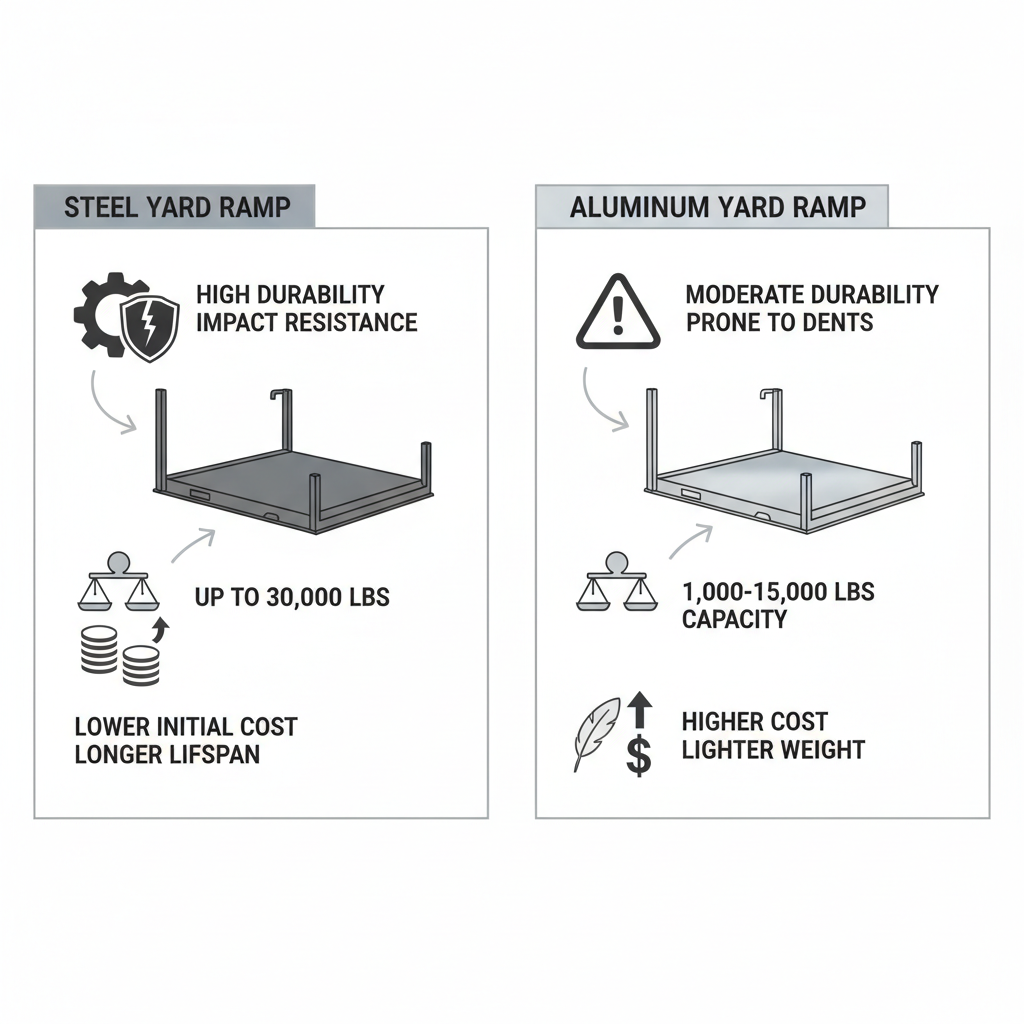
Steel vs. aluminum yard ramps: durability, capacity, and cost comparison
The infographic visually reinforces how steel excels in durability for long-term industrial value, while aluminum prioritizes ease of movement. These visuals aid in quick decision-making for procurement teams evaluating mobile loading inclines.
Integration with Portable Systems
Portable yard ramps seamlessly integrate with loading docks and ramp combos to create flexible solutions for varying site needs. We offer portable yard ramps that bolt or chain to stationary docks, enabling ground-to-truck access without permanent infrastructure. In combo configurations, a portable dock pairs with a yard ramp for elevated loading, ideal for temporary setups in construction or seasonal agribusiness.
Rental configurations provide ultimate flexibility, drawing from GSA standards for industrial equipment. Renting eliminates ownership burdens like maintenance and storage, allowing access to modern, high-capacity units with professional delivery and training. Our short- and long-term options, including rent-to-own, comply with federal guidelines for secure, compliant use.
To secure a portable yard ramp and prevent slipping:
- Position the ramp flush against the dock using built-in leveling legs.
- Attach heavy-duty chains or hooks to dock anchors, ensuring at least two connection points.
- Verify stability by testing with light loads before full operations.
- Regularly inspect for wear and re-secure after each use.
These steps, informed by GSA rental protocols, ensure safe integration. For example, Amazon utilizes our portable systems for rapid deployment in distribution centers, enhancing throughput without capital investment. Results and productivity improvements are site- and application-dependent; outcomes may vary.
Building on these basics, the Practical Section will guide implementation strategies.
Our coverage of the entire USA, one customer at a time, underscores our dedication to tailored material handling solutions.
Practical Applications of Forklift Yard Ramps
Implementing forklift yard ramps effectively requires attention to installation, daily use, and ongoing care. These mobile yard ramps serve as essential tools in industrial settings, bridging ground-level access to trucks and enhancing workflow efficiency. We focus on practical strategies that align with safety standards and operational needs.
Installation and Securing Best Practices
Proper installation ensures the forklift yard ramp withstands dynamic loads from forklifts maneuvering up and down the incline. We recommend a step-by-step process for ground-level setups to minimize risks and maximize stability.
- Site Preparation: Select a level, compacted surface free of debris. Measure the required height to match truck beds, typically 42 to 60 inches, and position the ramp accordingly.
- Positioning the Ramp: Align the forklift yard ramp parallel to the loading area. For portability, use integrated wheels to roll it into place before engaging the safety stands.
- Securing the Base: Anchor the ramp using heavy-duty chains or concrete blocks to prevent shifting during forklift operations. Attach chains to the truck’s undercarriage or fixed ground points, ensuring at least 12 inches of clearance.
- Height Adjustment and Locking: Raise the ramp to the desired level with the manual winch system, then lock the hydraulic struts. Test stability by applying gradual pressure simulating forklift weight.
- Final Checks: Verify all connections and inspect for obstructions. Train operators on safe ascent protocols, such as maintaining low speeds and centered loads.
This methodical approach, guided by OSHA guidelines, supports secure handling of dynamic movements and prevents accidents in busy yards.
Usage in Warehousing and Logistics
In warehousing and logistics, forklift yard ramps streamline loading and unloading, reducing downtime and labor costs. Consider a distribution center where trailers arrive irregularly; a portable yard ramp enables quick ground-to-truck transitions without permanent dock modifications.
Daily applications include inbound receiving, where operators use the ramp to access palletized goods efficiently. For outbound shipping, it facilitates faster pallet transfers, boosting throughput by up to 30% in high-volume scenarios. We advise matching ramp capacity to forklift ratings–typically 10,000 to 20,000 pounds–to avoid overloads.
Cost considerations play a key role. A standard portable yard ramp ranges from $5,000 to $15,000, depending on length and material. Businesses testing implementations often opt for rentals, which provide flexibility without upfront commitments.
To illustrate, a mid-sized logistics firm in Texas integrated portable yard ramps across three sites, cutting loading times from 45 to 20 minutes per truck and yielding annual savings of $25,000 through reduced overtime.
Selecting the right capacity involves assessing peak loads and forklift specs, ensuring safe and efficient operations. Factors like ramp angle–ideally 12 to 16 degrees–also influence usability, promoting smoother transitions in varied terrains.
Yard ramps prove invaluable in seasonal peaks, such as holiday surges in retail logistics, where quick setup adapts to fluctuating demands.
Rental vs Purchase Options
Acquiring forklift yard ramps involves weighing rental and purchase models based on operational needs and budget.
Based on GSA guidelines for industrial equipment leasing, rentals eliminate maintenance burdens and offer scalability for projects like temporary expansions. Purchasing suits established facilities seeking customization, potentially lowering costs over five years. We evaluate both to match client timelines, with rentals averaging $500 monthly for standard units.
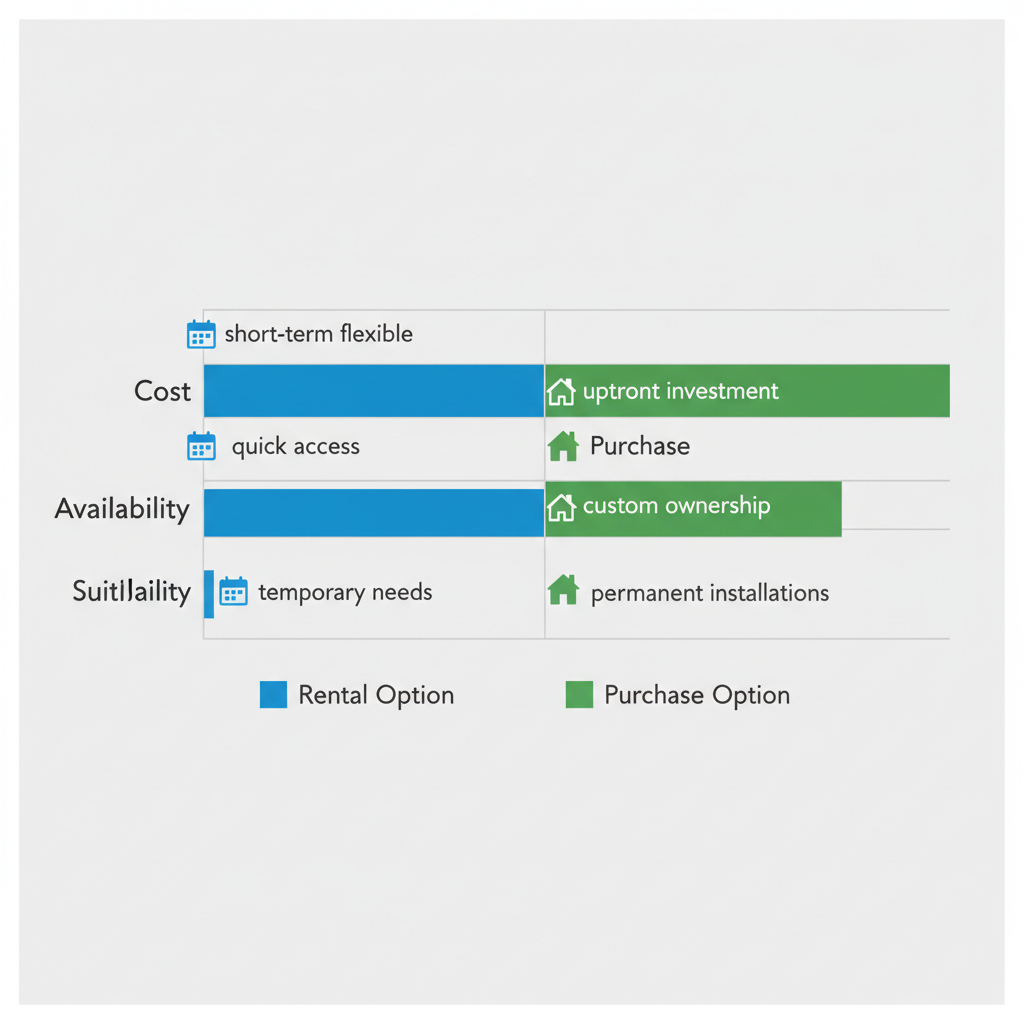
Visual comparison of rental versus purchase for yard ramps
This visual underscores how rentals suit short-term logistics spikes, while purchases align with long-haul efficiency. Decisions hinge on usage frequency and site permanence, with our rent-to-own programs bridging the gap for growing operations.
Maintenance for Longevity
Routine maintenance extends the life of steel yard ramps, countering wear from heavy forklift traffic and environmental exposure. We prioritize proactive care to uphold structural integrity and safety.
- Daily Inspections: Check for surface cracks, weld integrity, and hydraulic fluid levels. Wipe down to remove debris that could cause slips.
- Weekly Cleaning: Pressure wash the steel yard ramp to prevent rust buildup, especially in humid climates. Apply anti-corrosive coatings as needed.
- Monthly Load Tests: Simulate full capacities to detect frame stress. Lubricate winch mechanisms and pivot points with industrial grease.
- Annual Professional Review: Engage certified technicians for comprehensive exams, including non-destructive testing on high-wear areas like the lip plate.
Common issues like denting from impacts require prompt repairs to avoid propagation. For rust prevention, we suggest galvanization touch-ups and sheltered storage when idle.
Adhering to these checklists minimizes downtime and ensures compliance. Do not exceed rated capacities–consult the manufacturer for site-specific load and installation requirements. Follow manufacturer instructions and qualified technicians for installation, maintenance, and repairs; safety procedures must be observed.
For specialized scenarios, the Advanced Section covers expert-level optimizations.
Advanced Considerations for Forklift Yard Ramps
For industries requiring tailored solutions, custom configurations of Forklift Yard Ramp systems elevate operational efficiency in demanding environments. Our facilities across the United States specialize in custom industrial ramps designed for capacities exceeding 20,000 lbs, ensuring seamless integration with existing loading infrastructures. These bespoke builds address unique site challenges, such as integrating guardrails for enhanced safety or combining ramps with portable docks to create versatile access points. We prioritize steel constructions for their superior durability in heavy-duty applications, allowing clients to specify dimensions, bi-directional access, and specialized coatings resistant to corrosive materials.
Advanced securing mechanisms are essential for uneven terrain, where our custom solutions incorporate adjustable legs and hydraulic assists to maintain stability during forklift operations. This customization not only optimizes material flow but also reduces downtime in manufacturing and logistics settings. By leveraging our 35+ years in the material handling industry, we guide clients through the design process to meet precise needs, whether for temporary expansions or permanent installations.
To illustrate the value of these enhancements, consider the value of steel-based systems that outperform alternatives in rigorous scenarios, providing long-term reliability that aluminum options may lack under extreme loads. Transitioning to high-capacity needs, steel yard ramps facilitate efficient ground-to-dock access for loads up to 30,000 lbs, ideal for large-scale trucking and inventory management. Our rent-to-own programs, inspired by flexible models like those from GSA’s rental initiatives, allow businesses to transition from leasing to ownership without upfront capital strain, covering maintenance and upgrades along the way. Sourcing these in the US ensures compliance with domestic standards and quicker delivery; for instance, our yard ramps new york location serves the Northeast with rapid customization.
High-capacity sales tips include assessing forklift compatibility and terrain upfront to avoid mismatches, emphasizing the benefits of portable yard ramps for mobile setups that adapt to shifting operational demands. In compliance realms, advanced setups demand adherence to OSHA guidelines for load ratings and secure anchoring, with our engineering team verifying installations to prevent overload risks. We incorporate site-specific audits to ensure ramps meet seismic and environmental codes, bolstering safety in complex industrial environments. Regular inspections and capacity verifications are crucial, as results depend on proper use–consult us for tailored assessments. Do not exceed rated capacities; follow manufacturer instructions for installation and maintenance.
To address common queries, the FAQ section clarifies key points.
Frequently Asked Questions on Forklift Yard Ramps
What is the average cost of a Forklift Yard Ramp?
The typical cost for a durable forklift yard ramp ranges from $6,000 to $12,000, depending on size, material, and features. We recommend evaluating your loading needs to select the right model for optimal value.
How do you secure a forklift yard ramp to prevent slipping?
Always use wheel chocks or straps to anchor the ramp securely to the truck or dock. Our designs include reinforced plates for added stability, ensuring safe transitions during loading.
What weight capacity should a forklift yard ramp have for heavy loads?
Choose a steel yard ramp with a capacity at least 1.5 times your forklift’s rating to handle heavy loads safely. Do not exceed rated capacities–consult us for site-specific recommendations.
Can I rent a forklift yard ramp instead of buying one?
Yes, we offer short- and long-term rentals of portable yard ramps, including options through GSA’s Multiple Award Schedule for government buyers. This provides flexibility without ownership burdens.
What are the safety features of a mobile forklift yard ramp?
Key features include side curbs, anti-slip gratings, and low-angle designs to prevent tip-overs. We prioritize these in our forklift ramp solutions for enhanced worker protection.
How much does a portable yard ramp cost?
Portable yard ramps start around $5,000 for basic models, varying by capacity and portability. Contact us to discuss rent-to-own programs tailored to your operations.
In summary, these insights highlight our commitment to safe, efficient material handling solutions across the USA.
Optimizing Your Operations with Forklift Yard Ramps
In summary, the Forklift Yard Ramp stands as a vital asset for industrial efficiency, offering the durability of a steel yard ramp alongside the versatility of a portable yard ramp. These reliable loading ramps ensure seamless ground-to-truck transitions, supporting heavy loads with robust construction that withstands demanding environments.
Emphasizing safety and capacity, they minimize risks while maximizing productivity, with rental options providing flexible, cost-effective solutions backed by GSA-approved reliability for maintenance-free access.
We at Medlin Ramps, with 35 years in the material handling industry, are ready to assist. Contact us today for personalized advice on optimizing your operations with the right forklift ramps safety measures and custom configurations.