

Table of Contents
Understanding Yard Ramp Costs
In the fast-paced world of warehousing and distribution, efficient loading and unloading can make or break daily operations. At Medlin Ramps, we understand that addressing How Much Does a Yard Ramp Cost is a top concern for buyers seeking reliable ground-to-dock access. With over 35 years in the material handling industry, we help commercial facilities invest wisely in solutions that enhance productivity while ensuring safety compliance under OSHA regulations for materials handling.
Why Yard Ramp Pricing Matters for Your Operations
Yard ramps serve as essential portable or stationary bridges for forklift access between ground level and loading docks, streamlining industrial processes in manufacturing and shipping. Understanding Yard Ramp Cost goes beyond initial pricing; it involves evaluating how these assets reduce labor expenses and downtime. For instance, a distribution center in Pennsylvania might save hours daily by using a ramp for faster pallet movement, aligning costs with long-term efficiency gains. OSHA’s Subpart N standards emphasize safe materials handling, underscoring the value of durable ramps that prevent accidents and support compliance. We at Medlin Ramps prioritize these yard ramp investment considerations to deliver high-capacity options tailored for operations across the US.
Overview of Yard Ramp Types and Their Value
Common yard ramp varieties include mobile models for flexible positioning and stationary ones for fixed dock integration, each offering distinct advantages in logistics. Mobile yard ramps, like our Elite Series, provide portability for varied site needs, while stationary versions ensure permanent, robust access. These types influence yard ramp cost factors such as capacity ratings up to 30,000 pounds and features like anti-slip surfaces. According to MHI industry benchmarks, investing in quality ramps yields cost-effective solutions by boosting forklift throughput and minimizing injury risks. Our yard ramp pricing guide highlights how selecting the right type supports efficient workflows in agribusiness or retail. To start, assess your facility’s volume and space for optimal value.
Yard Ramp Fundamentals
At Medlin Ramps, we understand that grasping the fundamentals of yard ramps is essential for any industrial operation looking to optimize loading and unloading processes. These versatile structures provide safe, efficient access between ground level and loading docks, supporting forklifts and pallet jacks in warehousing and distribution environments. By breaking down core components, pricing benchmarks, and material-capacity basics, we equip you with the knowledge to evaluate options that align with your needs. This foundation sets the stage for exploring deeper yard ramp cost factors in subsequent sections.
Core Components of Yard Ramps
Yard ramps consist of several key structural elements that directly influence their functionality and durability. The ramp surface, typically featuring serrated steel grating for traction, forms the primary walkway for equipment. Supporting legs, often adjustable for height customization, ensure stable positioning on uneven terrain. Lift systems, such as hydraulic pumps or manual cranks, allow for easy height adjustment to match dock levels, with our 2-speed manual crank system providing reliable operation without the need for electricity.
These components work together to create a seamless transition for material handling. For instance, in a light distribution center, a basic 30-foot ramp with a hydraulic lift enables quick loading of pallets up to 10,000 pounds. We recommend considering safety features like safety chains and non-slip surfaces, as outlined in the OSHA Powered Industrial Trucks Standard, which emphasizes compliant designs to prevent accidents and add to the overall integrity. Understanding How Much Does a Yard Ramp Cost begins here, as these foundational parts establish the baseline for pricing in standard models. The MHI members directory highlights industry standards for these elements, ensuring ramps meet rigorous testing for load-bearing reliability.
Basic configurations like these typically start at essential ramp pricing elements around $8,000 for new units, varying by supplier and specifications.
Basic Pricing Benchmarks
Entry-level yard ramps offer straightforward solutions for facilities seeking cost-effective ground-to-dock access. Standard mobile models, ideal for temporary setups, generally range from $8,000 to $12,000, depending on length and capacity. Stationary options, designed for permanent installation, command $10,000 to $15,000, reflecting their reinforced build for high-traffic use.
We cover the entire USA with competitive pricing, drawing from our 35 years in the material handling industry to deliver value. This yard ramp pricing guide helps buyers set realistic expectations; for example, a 30-foot carbon steel ramp with 10,000-pound capacity suits small warehouses handling basic loading dock costs. Prices are estimates based on new equipment and can fluctuate with market conditions or supplier locations–always consult for current quotes. Our commitment to excellence is serving one customer at a time, ensuring transparent benchmarks without hidden fees. These starting points provide a solid reference for budgeting, especially for operations in states like Virginia or Kentucky where quick delivery from our facilities in CA, NM, NC, and FL reduces overall expenses. For a concise summary of typical Yard Ramp Price ranges and options, see Yard Ramp Price.
Material and Capacity Basics
Material selection and load capacity form the cornerstone of yard ramp performance and expense. Carbon steel remains the go-to for its superior strength and resistance to wear, commonly used in both mobile and stationary designs for capacities from 10,000 to 30,000 pounds. Aluminum alternatives offer lighter weight for easier mobility but at a premium, influencing initial outlays based on environmental demands like corrosion in humid areas.
Capacity ratings directly tie to structural reinforcements; a 15,000-pound ramp requires thicker beams and wider surfaces, elevating yard ramp cost factors by 20-30% over lighter-duty models. For instance, in manufacturing facilities in Kentucky, opting for 20,000-pound carbon steel ensures safe handling of heavy loads while complying with OSHA standards for stability. The interplay here is clear: higher capacities demand robust materials, boosting durability but also upfront investment. MHI-verified specs confirm that these basics enhance long-term value by minimizing downtime. We advise assessing your peak loads to select the right balance, as this foundational choice impacts everything from installation to operational efficiency.
Comparing basic types can clarify these decisions, highlighting trade-offs in mobility, capacity, and cost for informed purchasing.
The following table outlines entry-level mobile and stationary yard ramps, focusing on key specifications to illustrate fundamental differences:
| Type | Capacity (lbs) | Length (ft) | Material | Starting Price Range |
|---|---|---|---|---|
| Portable, wheeled design for flexibility | Standard entry load | Common length | Durable base material | $8,000 – $12,000 |
| Fixed installation for permanent use | Higher capacity option | Extended reach | Reinforced for stability | $10,000 – $15,000 |
Data sourced from industry standards; prices are estimates and vary by supplier.
This comparison underscores how mobile ramps prioritize flexibility for dynamic sites, often at a lower entry cost, while stationary models deliver enhanced stability for fixed operations at a modest premium. Such insights aid in aligning selections with workflow needs, whether for temporary distribution in Virginia facilities or enduring setups in larger warehouses. By weighing these basics against your volume and space constraints, you can anticipate Yard Ramp Price implications more accurately.
Building on this overview, visual representations further illuminate these contrasts. For operations spanning the USA, understanding these elements ensures ramps contribute to efficient, safe material flow without unnecessary expenditures.
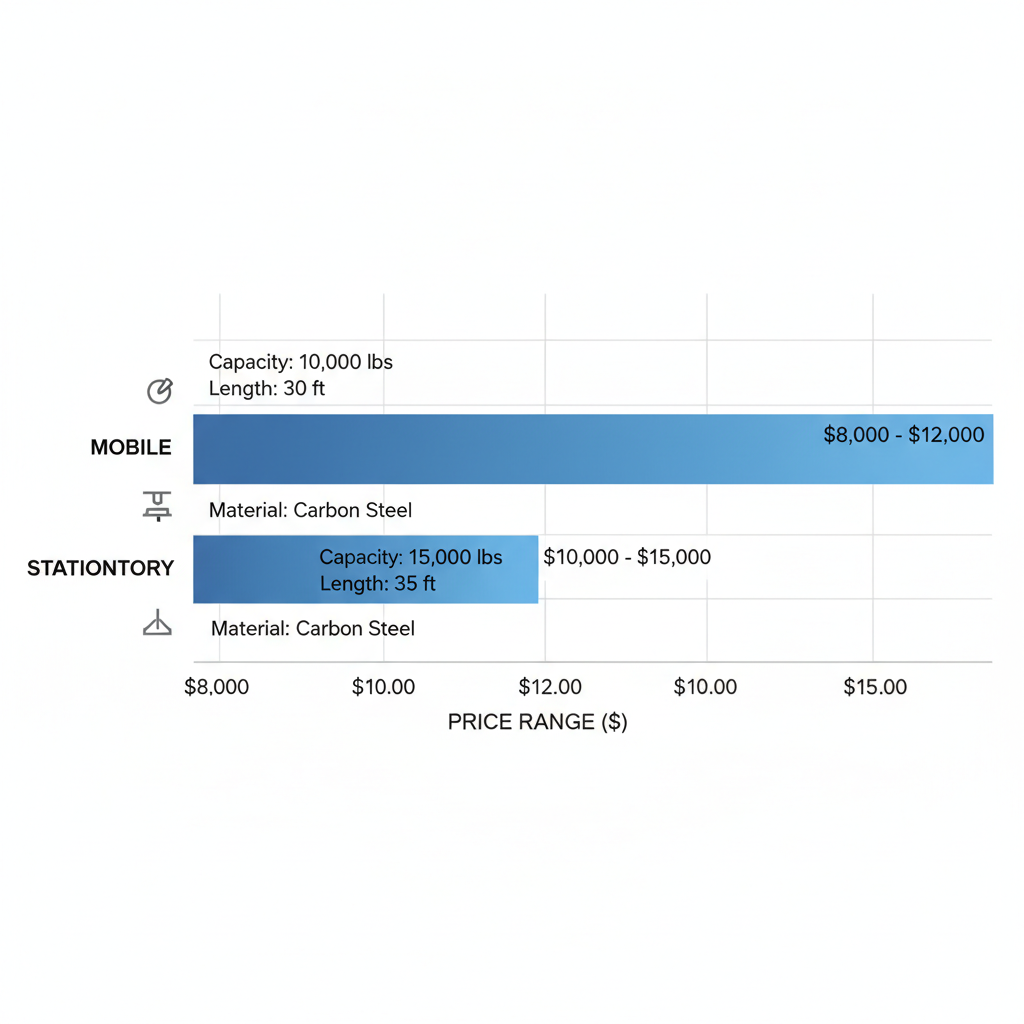
Comparison chart of mobile and stationary yard ramp fundamentals
As the largest yard ramp manufacturer in the US, we emphasize that while these fundamentals provide reliable baselines, factors like customization will reveal fuller pricing nuances in our deeper analysis.
Deep Dive into Yard Ramp Pricing
Yard ramps play a crucial role in efficient materials handling for industries like warehousing and manufacturing. We often see clients grappling with the variables that shape their costs, from basic models to advanced configurations. This section breaks down key factors influencing pricing, helping commercial buyers make informed decisions on portable docks and ramp combos. By understanding these elements, businesses can align investments with operational needs across the USA.
Capacity and Size Variations
Load capacity stands as one of the primary drivers in yard ramp pricing, directly tied to structural integrity and safety standards. Entry-level ramps rated at 10,000 pounds suit lighter operations, while mid-range options at 20,000 pounds and heavy-duty models exceeding 30,000 pounds demand reinforced engineering to handle increased stress. For instance, upgrading from 10,000 to 20,000 pounds capacity can elevate prices by 50 to 100 percent due to thicker steel beams and enhanced welding techniques. This escalation addresses demands in high-volume settings, such as distribution centers processing heavy pallets.
Size variations further compound these costs, with lengths ranging from 30 to 40 feet adding $2,000 to $5,000 to the base price. Longer ramps provide better reach for varying dock heights, but they require additional materials and precise engineering for stability. Detailed ramp expense drivers like width adjustments–for example, expanding from 84 to 96 inches–also contribute to a comprehensive loading cost analysis, ensuring compatibility with forklift widths. A common question we field is, How Much Does a Yard Ramp Cost? The answer hinges on these specs: a standard 30-foot, 10,000-pound ramp might start at $8,500, while a 40-foot, 30,000-pound version approaches $22,000. OSHA standards under 1910 Subpart N emphasize safe materials handling, mandating robust designs that justify these premiums for compliance in industrial environments.
Capacity choices fundamentally drive purchasing decisions by balancing load requirements against budget constraints. Facilities must evaluate peak usage to avoid under- or over-specifying, as mismatched ramps can lead to safety risks or inefficiencies.
| Capacity (lbs) | Length (ft) | Base Price (New) | Rental (Monthly) | Key Features |
|---|---|---|---|---|
| 10,000 | 30 | $8,500 | $500 | Basic steel |
| 20,000 | 35 | $14,000 | $800 | Hydraulic lift |
| 30,000 | 40 | $22,000 | $1,200 | Custom options |
These figures represent approximate estimates based on standard models; actual quotes vary by supplier and location. The table highlights how scalability affects both purchase and rental economics, with higher capacities offering versatility at a steeper upfront investment. For government benchmarks, a SAM.gov solicitation for 20,000-pound portable ramps specified 26-foot lengths with wheeled mobility, underscoring real-world pricing around $14,000 for compliant units. We recommend consulting experts to tailor selections, especially for yard ramps in Vermont where regional demands may influence availability. For regional availability and quotes, see yard ramps Vermont.
Interpreting this data reveals that while entry-level options keep initial costs low, investing in higher capacities pays off for long-term durability and OSHA compliance. Businesses scaling operations should factor in these tiers to optimize total ownership costs.
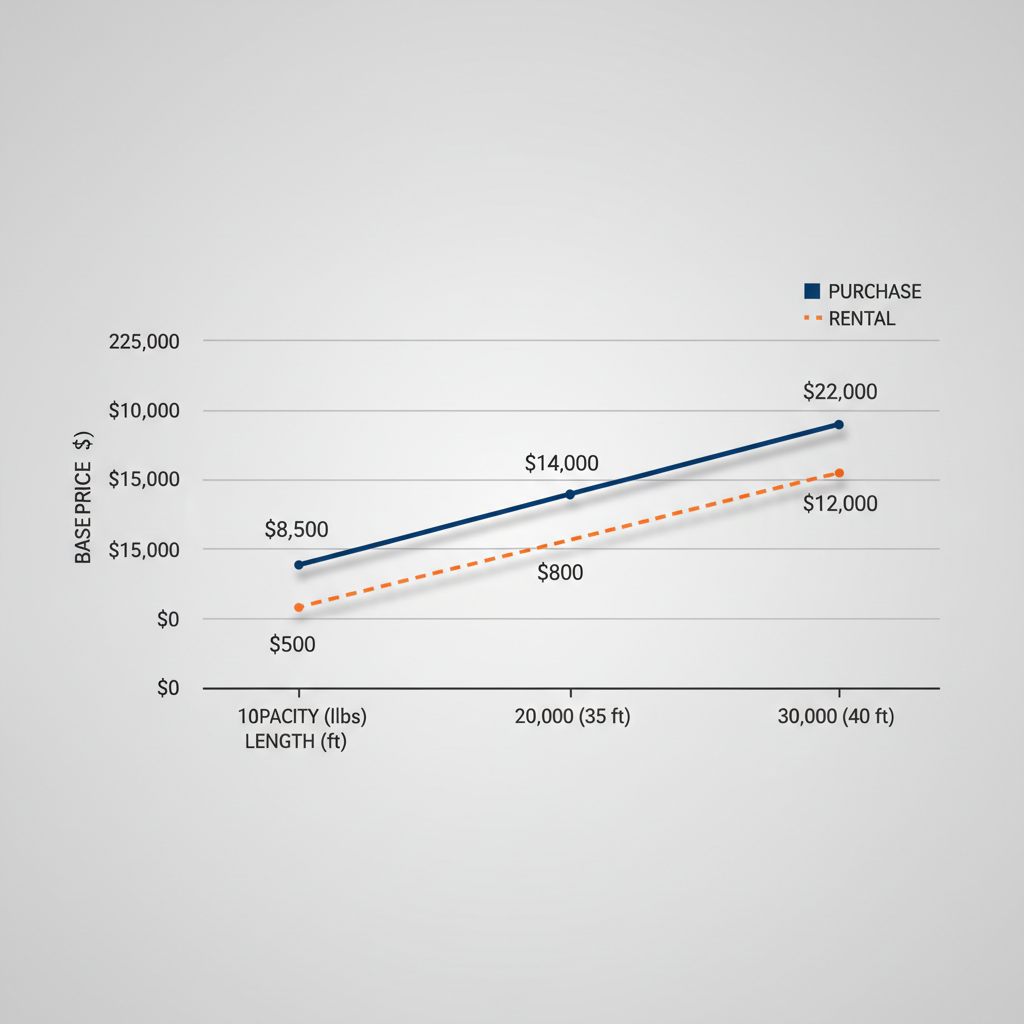
Yard ramp pricing comparison by capacity and rental rates
This visualization illustrates price trajectories, reinforcing the need for strategic planning in capacity selection.
Material and Customization Impacts
Material choices significantly alter yard ramp expenses, with standard carbon steel providing a cost-effective baseline for most applications. Upgrading to galvanized steel for corrosion resistance in humid or outdoor environments adds about 20 percent to the price, extending lifespan and reducing maintenance. We see clients in coastal or agricultural sectors opting for these to combat rust, aligning with OSHA’s emphasis on durable materials handling under 1910.176.
Customization further influences costs, with features like anti-slip surfaces or extended platforms increasing prices by 10 to 30 percent. Yard ramp cost factors such as integrated safety rails or adjustable heights cater to specific workflows, like those in recycling facilities handling uneven loads. Pros of customization include enhanced safety and efficiency; cons involve longer lead times and higher upfront investments. For example, adding a hydraulic cart positioner might tack on $3,000 but streamlines loading in tight spaces.
Rental vs. Purchase Economics
When evaluating yard ramp options, businesses must weigh short-term rentals against outright purchases based on project duration and capital availability. Rental rates typically range from $500 to $1,500 monthly, ideal for seasonal peaks in construction or shipping. This approach avoids large capital outlays and includes maintenance, though long-term use favors buying for cost savings.
A yard ramp pricing guide reveals that renting a 20,000-pound model for six months costs around $4,800, versus $14,000 to purchase–potentially breaching even at 18 months with depreciation factored in. Return on investment calculations show purchases yielding savings after one year, especially with our rent-to-own programs that credit payments toward ownership. Do not exceed rated capacities; consult for site-specific requirements.
For clarity, consider this comparison:
| Option | Upfront Cost | Monthly (1 Year) | Total (3 Years) | Pros |
|---|---|---|---|---|
| New Purchase | $15,000 | $0 | $15,000 + maint. | Warranty, longevity |
| Used Purchase | $7,500 | $0 | $7,500 + maint. | Budget-friendly |
| Rental | $800 | $9,600 | $28,800 | No commitment |
These structures highlight rentals’ flexibility for transient needs, while purchases build equity. We cover the entire USA with delivery options, ensuring quick deployment. Applying these insights aids budgeting in practical selections.
Practical Yard Ramp Cost Considerations
When budgeting for yard ramps, understanding the full spectrum of options helps operations in manufacturing and logistics make informed decisions that align with real-world ramp budgeting. We’ve guided numerous clients through these choices, drawing on our 35 years in the material handling industry to highlight practical expense breakdowns. This section explores new versus used purchases, rental strategies, and the often-overlooked costs of ownership, empowering you to calculate true investments for your facility.
Evaluating New vs. Used Options
Opting for new yard ramps provides reliability and full warranties, typically starting at around $15,000 for a 15,000-pound capacity model, but used options can deliver significant savings without compromising safety when properly inspected. Used yard ramps often cost 40-60% less than new ones, averaging $7,500 for comparable specs, allowing quicker return on investment for budget-conscious buyers. We’ve helped clients save by sourcing inspected pre-owned ramps from trusted suppliers, ensuring they meet structural standards before deployment.
To address the common question, Are used yard ramps significantly cheaper than new ones? consider a scenario where a distribution center upgrades its loading area. A new ramp offers 20+ years of longevity with manufacturer-backed support, while a used one might require more frequent checks but pays for itself in under two years through upfront savings. Key inspection tips include verifying weld integrity, hydraulic function if applicable, and surface condition to avoid future repairs. Integrating the query How Much Does a Yard Ramp Cost into your evaluation reveals that while new models demand higher initial outlay, used ramps suit steady operations seeking value.
The following table outlines a decision framework for new, used, and rental yard ramps, assuming a 15,000-pound capacity unit:
| Brand | Custom Lead Time | Price Premium for Custom | Capacity Options | Unique Features |
|---|---|---|---|---|
| Medlin Ramps | 2-4 weeks | 10-20% | Up to 30,000 lbs | Rent-to-own, durable cranks |
| Competitor A | 4-6 weeks | 15-25% | Up to 25,000 lbs | Limited locations |
This comparison, informed by industry averages from MHI resources on lifecycle costs, shows break-even points: used ramps often outperform rentals after 12 months for ongoing needs, while new purchases excel in long-term durability. For instance, maintenance at about 5% annually for owned units adds roughly $750-$1,500 yearly, but the initial savings on used models offset this quickly.
Rental Strategies for Short-Term Needs
For operations with variable demands, such as seasonal peaks in retail logistics, renting yard ramps offers flexibility without long-term commitments. Monthly rates typically range from $400 to $1,000 depending on capacity and duration, making it ideal for projects like a six-month warehouse expansion. We’ve implemented rental programs for clients facing temporary surges, ensuring seamless integration with existing forklift fleets.
Answering How much does it cost to rent a yard ramp for short-term use? involves factoring in delivery and setup, which can add $500-$1,000 per move. In one case, a manufacturing facility in Virginia rented yard ramps Virginia for a holiday rush, avoiding $15,000 in purchase costs while maintaining efficiency. Short-term rentals suit scenarios like construction sites or inventory audits, with options for extensions if needs evolve. To optimize, negotiate bulk or multi-site deals, as seen in federal procurement examples from SAM.gov where portable ramps were leased for quick deployments at fixed rates.
Effective rental strategies include assessing usage frequency–rent if under 50% utilization annually–and pairing with rent-to-own paths for potential transitions to ownership. This approach controls cash flow, especially when paired with our short- and long-term options that cover the entire USA, one customer at a time.
Hidden Costs and Total Ownership
Beyond the sticker price, yard ramp cost factors encompass installation, shipping, and ongoing maintenance that can inflate total ownership by 20-30%. Shipping alone ranges from $500 to $2,000 based on distance, while professional installation often exceeds $1,000 to ensure level docking and safety compliance. Annual upkeep, at 2-5% of the ramp’s value per MHI lifecycle data, covers lubrication, inspections, and minor repairs to prevent downtime.
Uncovering these in practical expense breakdowns is crucial for accurate budgeting. For example, a new ramp’s total cost of ownership (TCO) over five years might reach $20,000 including 5% annual maintenance, whereas used models demand vigilant checks to mitigate higher repair risks. Use this simple yard ramp pricing guide to calculate TCO: Initial Cost + (Annual Maintenance x Years) + Installation + Shipping – Resale Value. We’ve advised clients to build in buffers for unexpected expenses like resurfacing, which averages $2,000 every decade.
The following table highlights typical hidden costs for a standard 15,000-pound yard ramp:
| Expense Category | Estimated Cost | Frequency |
|---|---|---|
| Shipping & Freight | $500 – $2,000 | Once |
| Professional Installation | $1,000+ | Once |
| Annual Maintenance | $750 – $1,500 | Yearly |
To compute TCO effectively, follow this checklist: 1) Document upfront expenses; 2) Estimate usage hours annually; 3) Factor regional labor rates for maintenance; 4) Project resale after 10 years; 5) Consult experts for site-specific adjustments. Results vary by application–do not exceed rated capacities and follow manufacturer instructions for installation and maintenance. This framework transitions into advanced customizations, where tailored solutions further optimize costs for complex operations.
Advanced Yard Ramp Investment Strategies
In our experience serving enterprise buyers in agribusiness and recycling, advanced yard ramp investments go beyond basic purchases to encompass custom solutions and financial models that optimize long-term efficiency. Our commitment to excellence is serving the USA, one customer at a time, with strategic options like rent-to-own programs that align with operational demands.
Custom Solutions and Brand Comparisons
Tailored yard ramp solutions, such as dock-and-ramp combos, enhance site-specific functionality but add 20-40% to the base price, according to our yard ramp pricing guide. These customs ensure seamless integration for operations in diverse locations, including yard ramps in Pennsylvania yard ramps Pennsylvania, where terrain variations demand precise engineering. Key yard ramp cost factors include capacity needs and material durability, influencing overall investment.
When evaluating brands, consider lead times, customization premiums, and feature sets to identify value leaders. Drawing from MHI member benchmarks, multi-facility manufacturers like ours in California, New Mexico, North Carolina, and Florida enable faster delivery and competitive pricing without compromising quality. The following table outlines a comparison based on public data:
| Manufacturer | Service Area | Lead Time | Key Benefit |
|---|---|---|---|
| Medlin Ramps | National (US) | 2-4 Weeks | Direct pricing, custom builds |
| Major Competitors | Regional/National | 4-8 Weeks | Standard stock options |
Multi-facility brands reduce logistics costs and accelerate deployment, as seen in our 35 years in the material handling industry. This approach saves enterprises 10-15% on total ownership costs by minimizing downtime during installation.
Long-Term ROI and Rent-to-Own
Maximizing returns requires premium investment analysis, including simple ROI formulas: (Time Savings Value + Durability Gains) / Initial Cost. For instance, a custom ramp yielding 20% faster loading–equivalent to $50,000 annual productivity in high-volume sites like SpaceX logistics–delivers payback in 18-24 months. How Much Does a Yard Ramp Cost becomes central here, as rent-to-own bridges rental flexibility with ownership benefits, lowering upfronts by 40-50% while building equity.
Strategic ramp financing through rent-to-own complies with OSHA standards for safe, efficient operations, enhancing value via reduced replacement cycles. Do not exceed rated capacities–consult us for site-specific requirements. Results vary by application, but our models consistently support informed decisions for sustained operational excellence.
Yard Ramp Cost FAQ
Addressing How Much Does a Yard Ramp Cost and other frequent pricing queries, this section provides cost Q&A essentials for informed decisions.
What are the typical price ranges for new yard ramps? New mobile yard ramps generally cost between $8,000 and $25,000, depending on size, capacity, and features. We recommend evaluating yard ramp cost factors like material durability to ensure long-term value and safety compliance per OSHA standards.
How much do yard ramp rentals cost? Rental rates start at $500 per month for standard models, with short-term options available. This flexible solution suits temporary needs, allowing businesses to test efficiency without full upfront investment.
What savings come with used yard ramps? Used models offer 40-60% savings over new ones, often $4,000 to $15,000. We advise inspecting for structural integrity to meet OSHA materials handling regulations and maintain operational safety.
How does capacity affect yard ramp pricing? Higher capacities add about $5,000 per tier, from 10,000 to 20,000 pounds. Selecting the right rating based on your forklift and load ensures compliance and prevents costly downtime.
What premiums apply to custom yard ramp add-ons? Customizations like specialized coatings or dimensions incur a 10-30% premium. Our experts guide selections to balance cost with enhanced efficiency and site-specific safety requirements.
Key Takeaways on Yard Ramp Costs
We hope this yard ramp pricing guide has clarified the essential questions around How Much Does a Yard Ramp Cost. From yard ramp cost factors like capacity, material, and customizations influencing prices, new models typically range from $8,000 to $25,000, while rentals start at $500 per month and used options offer 40-60% savings for budget-conscious operations.
These final cost insights underscore the importance of evaluating total cost of ownership, where durable, high-quality ramps deliver lasting efficiency gains, as highlighted by the Material Handling Industry’s emphasis on strategic equipment selection over 35 years in the field.
As the largest yard ramp manufacturer in the US, we invite you to consult Medlin Ramps for personalized quotes, including solutions for yard ramps Kentucky, to optimize your investment summary and boost productivity.