

Table of Contents
Essential Guide to Buying Yard Ramps
In today’s fast-paced industrial environments, efficient material handling is crucial for warehouses and distribution centers across the US. Facilities often face challenges with loading and unloading trucks without permanent docks, leading to delays and safety risks. That’s where yard ramps come in–portable solutions that bridge the gap between ground level and truck beds, enabling seamless forklift access.
At Medlin Ramps, with over 35 years in the material handling industry, we specialize in manufacturing durable yard ramps designed to meet ANSI MH30.1-2022 standards for capacity ratings and leveling, ensuring compliance and reliability. Whether you decide to Yard Ramps for Sale or explore a used yard ramp, key factors include load capacities up to 20,000 lbs, heavy-duty steel construction, and customization options like adjustable heights for various truck sizes. Common types include mobile, stationary, and portable yard ramps, with average costs starting at $5,000 for basic models. For instance, a Kentucky warehouse improved throughput by 30% after acquiring mobile dock equipment to handle irregular deliveries.
Buying offers long-term savings over renting, plus tailored features for your operations. How do you choose the right size? Consider truck heights and forklift needs, topics we’ll explore next alongside benefits, functionality, and best practices for purchase loading ramps.
Understanding Yard Ramps
When businesses seek to enhance loading operations, deciding to buy yard ramp solutions becomes a strategic choice for flexibility and efficiency. Yard Ramps serve as essential tools in material handling, particularly for facilities without permanent loading docks. With over 35 years in the material handling industry, we design these ramps to meet diverse industrial needs, ensuring compliance with safety standards like OSHA 1917.124, which mandates robust construction to support loads and prevent slippage.
Key Specifications and Features
Yard ramps typically feature load capacities ranging from 10,000 to 20,000 pounds, constructed from durable steel to withstand heavy industrial use. This steel build ensures longevity and resistance to wear, aligning with OSHA requirements for structural integrity under regulation 1917.124, which emphasizes ramps strong enough to handle vehicular traffic without deformation. Key features include a 2-speed manual crank system for effortless height adjustment from 36 to 60 inches, accommodating various truck beds.
Anti-slip surfaces, often with diamond-plate treads, provide secure footing for forklifts and pedestrians, reducing accident risks as per OSHA guidelines on slip-resistant designs. Portable yard ramp models offer mobility, allowing repositioning across non-dock areas for versatile loading. We incorporate safety edges and optional guardrails for steeper inclines over 20 degrees, promoting safe passage. These specifications enable facilities to acquire loading platforms that enhance operational flow while adhering to federal maintenance and inspection protocols for used equipment.
Cost Factors for New and Used Models
Pricing for yard ramps varies based on size, capacity, and condition, with new models generally ranging from $5,000 to $15,000 depending on specifications. Factors influencing costs include ramp length (30 to 40 feet) and width (typically 60 to 96 inches), which affect material usage and shipping. A used yard ramp can offer savings of 30-50% compared to new, but buyers must verify condition through inspections focused on weld integrity and surface wear, as outlined in OSHA 1917.124 for ongoing maintenance.
New ramps provide warranties and pristine performance, while used ones may require refurbishments adding to upfront expenses. Consider rental options for short-term needs, with our rent-to-own programs easing budgeting. Here’s a quick pros/cons list:
- New Yard Ramps: Pros – Full warranty, latest safety features, optimal efficiency; Cons – Higher initial cost.
- Used Yard Ramps: Pros – Lower price, immediate availability; Cons – Potential repair needs, shorter lifespan.
These elements help in informed budgeting for mobile dock access solutions tailored to your volume.
Sizing for Your Facility
Selecting the right yard ramp size starts with assessing truck types and dock heights, typically 36 to 60 inches for standard trailers. Measure your facility’s operational space, aiming for ramp lengths of 30 to 40 feet to achieve safe incline angles under 14 degrees, preventing forklift tip-overs as per OSHA stability standards in 1917.124.
Consider door widths and aisle clearance; a 96-inch wide ramp suits larger forklifts, while narrower options fit tighter spaces. For portable yard ramp use, factor in ground-to-truck elevation and floor strength to support the ramp’s weight. We recommend site surveys to customize dimensions, ensuring seamless integration with your workflow. Proper sizing avoids pitfalls like undersizing, which can bottleneck loading and compromise safety. By aligning specs to your needs, these ramps maximize productivity across the USA, one customer at a time.
Key Benefits of Yard Ramps
When considering options to optimize loading operations, many businesses decide to buy yard ramps for their facilities. As a leading yard ramps manufacturer, we have seen how these investments deliver substantial value in warehousing and manufacturing environments. Yard ramps address common challenges like uneven terrain and limited dock space, offering a reliable solution that enhances workflow efficiency. Our clients across the United States benefit from quick delivery through our nationwide facilities, making it easier to integrate portable yard ramps into diverse operations.
Efficiency and Cost Savings
Yard ramps significantly streamline loading and unloading processes, reducing labor requirements and minimizing downtime. For high-volume operations, the time savings become evident quickly; workers can load trucks in minutes rather than hours using traditional methods. This efficiency translates to cost savings, as businesses avoid overtime pay and speed up turnaround times for deliveries.
Investing in ownership over rentals proves particularly advantageous for frequent use. While initial costs may seem higher, the return on investment materializes through eliminated recurring fees and extended equipment lifespan. For instance, in agribusiness settings, portable yard ramps facilitate faster hay bale loading, cutting operational expenses by up to 30% over time based on industry benchmarks. Our rent-to-own programs further ease the transition, allowing companies to build equity without upfront burdens. By opting for mobile platforms, facilities achieve sustained productivity gains that support long-term growth.
Versatility for Industrial Use
Yard ramps excel in their adaptability, fitting seamlessly into various industrial settings from distribution centers to construction sites. Their portable design accommodates different truck heights and types, including flatbeds and semis, without requiring permanent modifications. This flexibility proves essential for facilities with uneven terrain or temporary setups, where fixed docks fall short.
Businesses in manufacturing and recycling often rely on these ramps for multi-purpose applications, such as transferring goods between ground level and elevated trailers. A used yard ramp offers a budget-friendly entry point for smaller operations, providing the same durability as new models at a reduced price. We support diverse needs with custom configurations, ensuring compatibility across industries like shipping and retail logistics. This versatility not only expands operational capabilities but also future-proofs investments against changing facility layouts.
The decision to buy versus rent a yard ramp often hinges on specific operational demands. The table below outlines key differences to guide informed choices:
| Factor | New Yard Ramp | Used Yard Ramp |
|---|---|---|
| Cost | $5,000-$15,000 | $2,000-$8,000 |
| Warranty | Full manufacturer warranty | Limited or as-is |
| Condition | Like-new, certified | Inspected but variable |
This comparison highlights how purchasing aligns with stable, high-volume needs, while rentals suit sporadic applications. Our experience shows that for ongoing operations, buying fosters greater control and cost predictability. Clients frequently report improved asset management after transitioning to owned equipment, aligning with strategic goals for efficiency and scalability.
Safety and Compliance Advantages
Safety remains a top priority in material handling, and yard ramps incorporate features that mitigate common risks. Guardrails, non-slip treads, and reinforced grating prevent slips and falls, reducing accident potential during loading. These elements align with OSHA standards, helping businesses maintain compliance and avoid penalties.
Consider a tragic OSHA-reported incident from February 2022 at a Federal Express facility, where a forklift overturned on a damaged mobile container ramp, resulting in a fatal crushing injury to a 32-year-old material handler. The accident, detailed in OSHA’s records, stemmed from a concave grating section that destabilized the equipment. Proper yard ramps with regular inspections contrast sharply, offering stable platforms that enhance worker protection. Our designs emphasize durability, including 2-speed manual cranks for safe positioning.
By investing in quality yard ramps, companies not only lower injury rates but also streamline regulatory audits. This focus on safety boosts employee confidence and productivity, underscoring the broader value of these tools in creating secure work environments.
How Yard Ramps Work
When deciding to buy yard ramp solutions for your facility, understanding their operational mechanics is essential. As a leading material handling equipment provider, we design our ramps to seamlessly integrate into industrial workflows, whether you opt for a new portable yard ramp or a used yard ramp. This section breaks down the setup, daily operation, and upkeep, helping you evaluate how these tools enhance efficiency at loading docks.
Installation and Setup Process
Proper installation ensures safe and effective use of yard ramps. For portable yard ramps, begin by selecting a stable, level ground surface near the truck or trailer. Position the ramp’s base against the dock edge or vehicle, using the built-in 2-speed manual crank to adjust the height precisely. Secure the ramp with anchor points or wheel chocks to prevent shifting, as required by OSHA 1917.124 for secure positioning and load support up to 20,000 lbs.
For stationary yard ramps, professional anchoring into concrete foundations provides permanence, ideal for high-traffic areas. We ensure our ramps include easy-setup features like adjustable legs for uneven terrain. Always verify alignment to avoid improper leveling, a common error that can compromise safety. Integrate with dock boards for smooth transitions. Our rent-to-own options allow testing these setups without upfront commitment, aligning with 35 years in the Material Handling Industry.
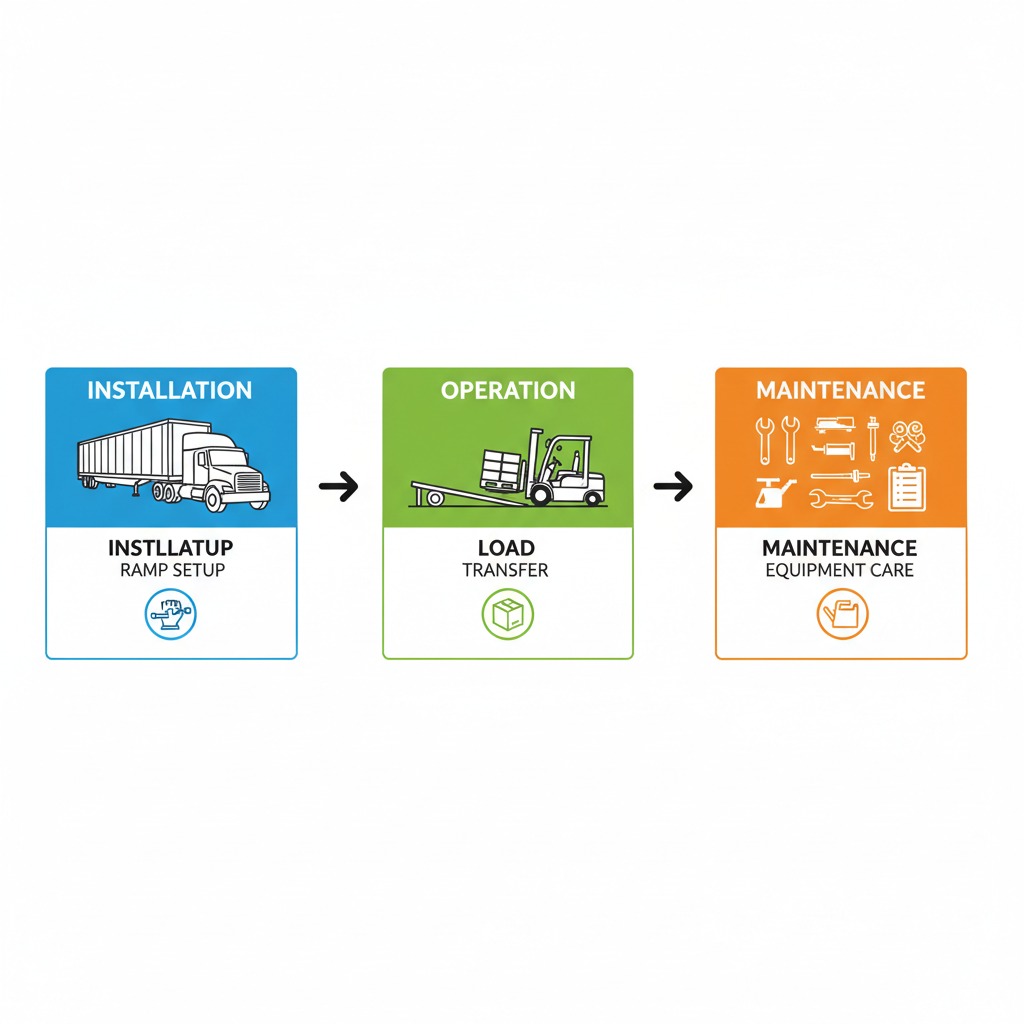
Yard ramps process: installation, operation, and maintenance stages
This visual overview illustrates the key stages, emphasizing safety from the outset. Building on secure setup, operators can confidently proceed to daily tasks.
Operation with Forklifts
Operating yard ramps with forklifts demands adherence to guidelines for safe navigation. Approach the ramp at a controlled speed, not exceeding 5 mph, and maintain a straight angle to minimize tipping risks. Once on the ramp, distribute loads evenly across the platform to stay within rated capacities, as OSHA 1917.124 mandates strength to support intended weights and prevent edge run-offs.
Utilize mobile access ramps by centering the forklift’s load over the ramp’s centerline for stability. For portable models, confirm the crank is locked before driving up. We recommend training on approach angles, especially with used yard ramps, to ensure slip-resistant surfaces perform optimally. In marine or warehouse settings, this process helps operate loading docks efficiently while complying with federal standards. Do not exceed rated capacities–consult us for site-specific requirements.
Maintenance for Longevity
Routine maintenance extends the life of both new and used yard ramps. Conduct daily visual inspections for cracks, weld integrity, and secure fasteners, focusing on high-wear areas like the crank mechanism. Lubricate moving parts weekly with manufacturer-recommended grease to ensure many operation, aligning with OSHA’s emphasis on well-maintained equipment to prevent hazards.
Monthly checks include testing load capacity and surface grip, particularly for portable yard ramps exposed to weather. Address signs of wear, such as corrosion or uneven leveling, promptly to avoid downtime. Our durable designs, backed by multiple U.S. manufacturing centers, support these practices. For rented units, our programs include guidance to maintain performance. Follow manufacturer instructions and qualified technicians for repairs; safety procedures must be observed. Proper care prevents issues, transitioning smoothly to best practices in your operations.
Best Practices for Buying Yard Ramps
When deciding to buy yard ramp solutions for your material handling needs, we recommend a thorough approach to ensure safety and efficiency. At Medlin Ramps, we guide customers through evaluating options like new or used models to match their operational demands. Incorporating a portable yard ramp can enhance loading flexibility without permanent dock modifications. Key considerations include compatibility with your forklifts and site layout, helping you select dock equipment that supports scalability. We cover the entire USA, providing reliable options from our multiple facilities to minimize delivery times and costs.
Evaluating Used Options
Assessing a used yard ramp requires a detailed inspection to avoid potential hazards. We advise starting with the structural integrity: check for rust on the frame and deck, ensuring welds are intact without cracks. Verify the capacity plate matches your forklift load ratings, and inspect the grating for dents or concavities that could cause instability. Review the equipment’s history, including previous usage and maintenance records, to gauge longevity.
A common oversight is neglecting these checks, as evidenced by an OSHA-reported incident in 2022 where a damaged grating panel on a mobile container ramp led to a fatal forklift overturn. This underscores the risks of overlooked wear, emphasizing regular assessments to comply with safety standards.
Here is a checklist for inspecting pre-owned ramps:
- Examine surface for excessive wear or damage.
- Test the handrails and lip for secure attachment.
- Confirm hydraulic or crank systems operate smoothly.
- Assess overall stability on uneven ground.
When weighing new versus used yard ramps, several factors influence the choice. Budget constraints often drive decisions, but reliability plays a crucial role in long-term operations. The following comparison highlights key differences based on industry standards and OSHA guidelines.
New yard ramps offer peace of mind with comprehensive warranties and pristine condition, ideal for high-volume sites prioritizing minimal downtime. Used options provide cost savings for budget-conscious buyers, but require diligent inspections to ensure safety. Choose new for guaranteed performance in demanding environments; opt for used when initial capital is limited, provided thorough evaluations confirm quality. Do not exceed rated capacities–consult us for site-specific load and installation requirements.
This balance helps facilities source mobile loaders effectively while mitigating risks.
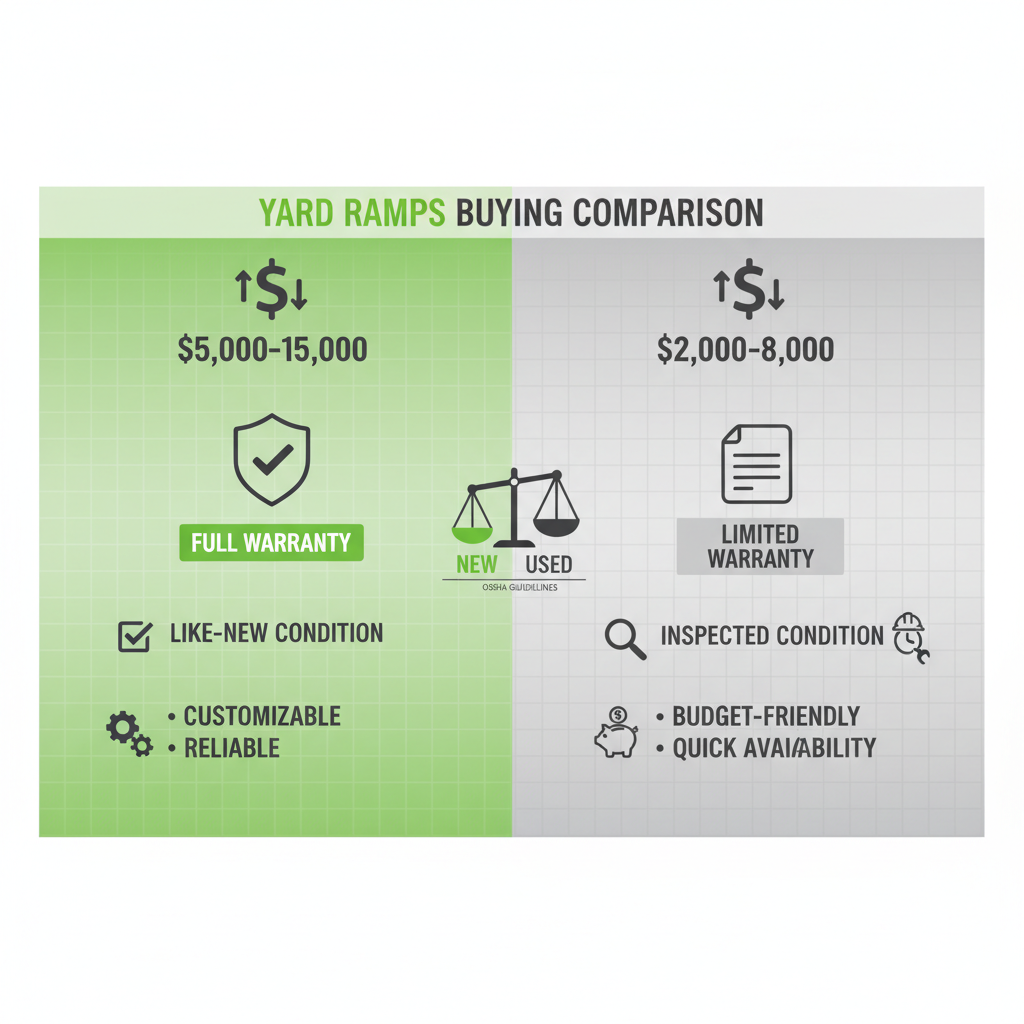
New vs used yard ramps comparison highlighting costs and safety features
Building on these evaluations, integrating visual aids like this infographic reinforces the importance of prioritizing condition over savings alone. It illustrates how proactive checks can extend equipment life and protect workers, aligning with our commitment to excellence in serving the USA, one customer at a time.
Permit and Compliance Checks
Before installing any yard ramp, verify local regulatory requirements to avoid fines or operational halts. For portable yard ramps used in temporary setups, permits are typically minimal, focusing on site safety rather than fixed structures. However, permanent installations often require building permits, especially if altering loading areas or exceeding certain weights.
We recommend consulting municipal codes and OSHA standards for ground-to-dock access. In regions like the Southeast, zoning laws may apply to mobile setups on leased properties. Always conduct a site assessment for soil stability and clearance. Follow manufacturer instructions and qualified technicians for installation; safety procedures must be observed. This ensures seamless integration without compliance issues.
Addressing these steps answers common concerns about legal hurdles, allowing confident deployment of your equipment.
Supplier Selection Tips
Choosing a reliable supplier is essential for quality yard ramps in Kentucky and beyond. Look for providers of yard ramps kentucky with 35 years in the material handling industry, offering both sales and rentals for flexibility. Prioritize those with multiple US facilities–such as in California, New Mexico, North Carolina, and Florida–for faster delivery and personalized service.
Evaluate certifications like ISO compliance and verify they handle used yard ramp sales with inspection guarantees. Consider rental alternatives or rent-to-own programs if testing needs arise, ensuring forklift compatibility. Customer service is king; select partners who provide customization and support post-purchase.
By focusing on these criteria, you can source mobile loaders that meet your needs reliably, enhancing warehouse efficiency across the country.
Final Considerations for Yard Ramp Purchases
Deciding to buy yard ramp solutions requires careful evaluation of your facility’s unique demands, ensuring seamless integration into daily operations. When considering a buy yard ramp option, prioritize sizing that matches your loading dock heights and forklift capacities to optimize workflow efficiency. Safety remains paramount, with adherence to ANSI MH30.1-2022 and ANSI MH30.2 standards guaranteeing robust design and testing for dock leveling devices. These guidelines emphasize structural integrity under heavy loads, preventing accidents during material handling. For cost-effectiveness, compare initial investments against long-term durability, especially for options like a used yard ramp that delivers reliable performance at a reduced price point.
We recognize that buying versus renting depends on your projected usage; for sustained needs, purchasing a portable yard ramp provides ownership benefits and customization flexibility. Key takeaway: Consult our experts early to tailor solutions, such as mobile or stationary designs, to your specifications. With 35 years in the material handling industry, we offer comprehensive selections from new to used portable ramps, supported by rent-to-own programs.
As the largest yard ramp manufacturer in the US, we invite you to finalize your loading equipment choice by assessing how these insights align with your requirements. We cover the entire USA through our distribution centers, including specialized support for yard ramps vermont. Commit to dock solutions that enhance safety and productivity–contact us today for personalized guidance. Results may vary by application; always consult for site-specific advice.