

Table of Contents
Essential Guide to Yard Ramps for Sale
In bustling warehouses and distribution centers, efficient loading and unloading often face challenges from ground-to-dock height differences, slowing forklift operations and risking safety. Yard ramps for sale provide a vital solution, serving as portable or stationary steel platforms that bridge these gaps, enabling seamless material handling in industries like manufacturing and logistics. These heavy-duty ramps enhance productivity by allowing forklifts to access truck beds without permanent dock modifications.
At Medlin Ramps, we bring over 35 years in the material handling industry to deliver reliable yard ramps across the United States. With nationwide facilities in California, New Mexico, North Carolina, and Florida, we offer new Buy Yard Ramp, used yard ramps, and rental options, including portable yard ramps and mobile loading ramps built to handle capacities up to 20,000 pounds. Our customizable designs ensure compliance with OSHA standards under 1926.250, which require secure ramps for safe vehicle movement and fall protection during materials handling.
This guide explores yard ramp types, benefits for operations, and best practices for selection. We cover costs typically ranging from $5,000 to $15,000 based on specifications like length and capacity, helping you understand how to choose the right one for your warehouse needs.
For instance, in a retail logistics scenario, opting for second-hand dock ramps can provide durable steel construction at a fraction of the cost, offering advantages like stability and ease of relocation while meeting regulatory load limits. Our commitment to excellence serves one customer at a time, covering the entire USA with tailored solutions.
Understanding Yard Ramps and Their Applications
At Medlin Ramps, with over 35 years in the material handling industry, we specialize in providing reliable solutions for ground-to-dock access. Yard Ramps serve as essential equipment for efficient loading and unloading in warehouses and distribution centers across the United States. These versatile structures bridge the gap between ground level and dock heights, enhancing safety and productivity without the need for permanent installations. Understanding their types, specifications, and applications empowers industrial buyers to select options that align with operational demands. We cover the entire USA, one customer at a time, offering both new and used models tailored to diverse needs.
Types of Yard Ramps Available
Yard ramps for sale come in several configurations to suit varying facility requirements. Portable yard ramps, often referred to as mobile dock ramps, feature a wheeled design for easy relocation, making them ideal for temporary or multi-door setups. These steel units typically handle capacities from 10,000 to 20,000 lbs, with lengths ranging from 25 to 40 feet, allowing flexibility in tight spaces. Stationary yard ramps, in contrast, provide a fixed solution bolted to the ground for high-traffic docks, ensuring long-term stability in permanent installations. As members aligned with MHI standards, we at Medlin Ramps inspect all options to meet industry safety guidelines, including anti-slip surfaces and structural integrity checks.
Used yard ramps offer a cost-effective entry point for budget-conscious operations, often sourced from reliable fleets and refurbished for quality assurance. These pre-owned loading platforms retain robust performance while reducing initial outlay. Key distinctions include mobility for portable models versus permanence for stationary ones, with each type addressing specific workflow challenges. We recommend evaluating site layout and usage frequency when choosing, as portable options shine in dynamic environments like seasonal shipping peaks.
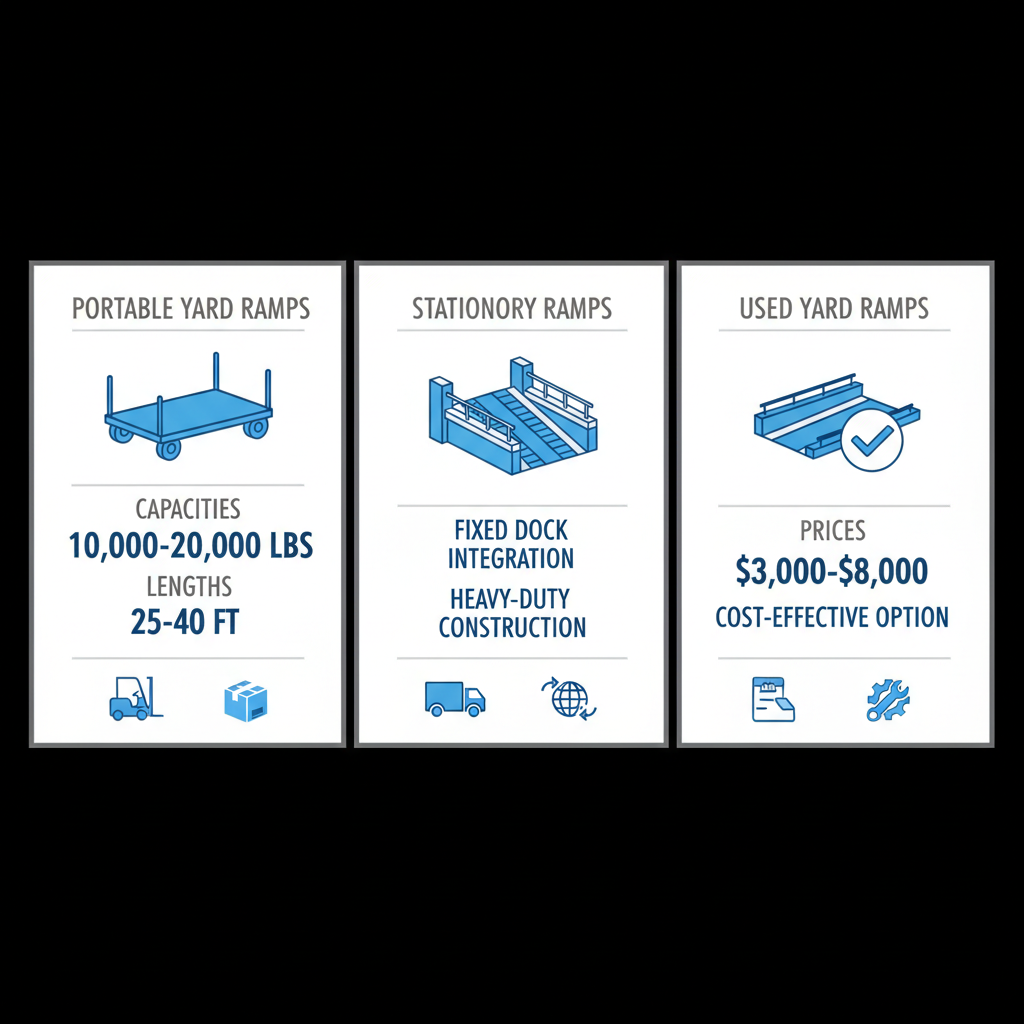
Yard ramps types and specifications for industrial applications
This visual breakdown highlights how different ramp varieties integrate into daily operations, from quick setups to enduring fixtures.
Key Specifications for Purchase Decisions
Selecting the right yard ramp hinges on critical specifications that match warehouse capabilities. Weight capacities generally span 10,000 to 20,000 lbs for standard models, accommodating most forklift loads while adhering to MHI-recommended safety margins. Materials like heavy-duty carbon steel ensure durability against daily wear, with thicknesses of 5/8 inches or more for load-bearing strength. Dimensions vary, with widths from 60 to 96 inches and heights adjustable via hydraulic or mechanical lifts to align with dock elevations of 40 to 60 inches.
Costs for yard ramps for sale reflect these features: new units range from $5,000 to $12,000, depending on size and capacity, while used yard ramps typically fall between $3,000 and $8,000 after thorough inspections. These pre-owned options maintain comparable specs, often with warranties on refurbished components. At Medlin Ramps, our largest yard ramp manufacturer status in the US allows competitive pricing through multiple distribution centers in California, New Mexico, North Carolina, and Florida. Consider factors like surface traction and lip extensions for seamless transitions. A simple checklist can guide decisions: assess load requirements, measure dock heights, budget for maintenance, and verify compliance with OSHA standards. Do not exceed rated capacities–consult us for site-specific requirements.
Common Uses in Industrial Settings
In warehousing and logistics, yard ramps facilitate seamless ground-to-dock transfers for pallets and goods. Portable yard ramps excel in manufacturing facilities for loading trucks at undocked areas, reducing downtime during peak hours. Distribution centers benefit from stationary models for consistent access, streamlining inbound and outbound flows in retail supply chains. We at Medlin Ramps see frequent applications in recycling operations, where mobile dock ramps handle variable loads like scrap metal without infrastructure changes.
For construction sites, used yard ramps provide temporary elevation for material delivery, integrating with forklift extensions for enhanced reach. Agribusiness employs these for bulk handling in silos or fields, while shipping yards use them to optimize space in congested ports. Selection criteria include traffic volume–opt for higher capacities in high-use scenarios–and terrain adaptability for uneven grounds. Address queries like weight capacities by noting 15,000 lbs as a versatile midpoint for most needs. Overall, these ramps boost efficiency: for instance, a 30-foot portable model can cut loading times by facilitating direct forklift access. Understanding these uses ensures informed choices that enhance safety and throughput, paving the way for operational benefits like reduced labor costs and faster turnarounds.
Benefits of Heavy-Duty Yard Ramps
At Medlin Ramps, we understand the demands of industrial operations, which is why our heavy-duty steel yard ramps stand out as reliable yard ramps solutions. These robust loading platforms provide unmatched advantages in durability, safety, and efficiency, helping businesses like yours optimize loading processes. Whether opting for new, portable, or used options, investing in these ramps delivers long-term performance tailored to warehousing, distribution, and agribusiness needs.
Durability and Long-Term Value
Our heavy-duty yard ramps feature carbon steel construction that far surpasses alternatives like aluminum or wood in withstanding rigorous daily use. Carbon steel offers superior resistance to wear, corrosion, and heavy impacts from forklifts and pallets, ensuring longevity in demanding environments. For instance, in agribusiness settings where ramps handle frequent soil and equipment exposure, steel maintains structural integrity over years, reducing the need for frequent replacements.
To illustrate the advantages, consider this comparison of materials:
| Feature | Carbon Steel | Aluminum | Wood (Temporary) |
|---|---|---|---|
| Weight Capacity | Highest (Up to 30,000 lbs) | Moderate (Up to 15,000 lbs) | Low |
| Durability | Extreme | High | Very Low |
| Maintenance | Low (Steel Refurbishment) | Low | High Replacement Rate |
Steel ramps, such as our yard ramps for sale, provide better cost savings through extended service life and minimal maintenance. We offer used yard ramps that undergo thorough inspections, delivering refurbished dock access at a fraction of the cost without compromising quality. With 35 years in the Material Handling Industry, our commitment ensures these investments yield sustained value for your operations.
Safety Enhancements in Loading Operations
Safety remains paramount in warehouse loading, and our heavy-duty yard ramps incorporate features designed to minimize risks and ensure compliance with industry standards. Anti-slip surfaces on the deck and curb guards prevent slips and falls during transitions, while integrated safety chains secure the ramp to trailers, reducing movement during operations. The 2-speed crank system allows controlled height adjustments, accommodating various dock heights safely.
Drawing from MHI member insights on loading equipment, these ramps align with benchmarks that show a 30% reduction in loading accidents when proper restraints and levelers are used. In high-traffic environments like distribution centers, this translates to fewer injuries and downtime. We prioritize features like reinforced side rails to contain loads, protecting workers and cargo alike. For compliance-focused buyers, our designs meet OSHA guidelines, fostering a secure workflow that supports overall site safety protocols.
Efficiency Gains for Warehouses
Heavy-duty yard ramps boost warehouse productivity by streamlining loading and unloading processes, particularly with our portable yard ramps that offer flexibility without permanent installations. These mobile units enable quick repositioning across facilities, cutting setup times and allowing forklifts greater maneuverability for faster pallet handling. In manufacturing or retail logistics, this means shorter cycle times–up to 20% improvement based on industry loading efficiency data.
Portable options suit seasonal demands in agribusiness, where ramps can be relocated as needed, while used yard ramps provide budget-friendly entry into enhanced operations without sacrificing performance. Our custom solutions, including ramp-and-dock combos, integrate seamlessly into existing layouts, optimizing space and throughput. By facilitating smoother transitions between ground and trailer levels, these ramps reduce congestion and accelerate order fulfillment, helping operations cover the entire USA one customer at a time with reliable efficiency.
How Yard Ramps Function in Operations
Yard ramps play a crucial role in streamlining warehouse and loading operations by providing a safe bridge between ground level and truck beds or docks. As a leading medlin ramps manufacturer, we design our ramps to enhance efficiency while prioritizing worker safety. This section explores the practical aspects of using these tools, focusing on setup, integration, and maintenance for both new and used models.
Setup and Adjustment Processes
Setting up yard ramps requires careful attention to ensure stability and compliance with safety standards. Begin by selecting a flat, level surface near the loading area to position the ramp. For yard ramps for sale, our portable models feature a two-speed manual crank system that allows for precise height adjustments, typically ranging from 3 to 6 feet to match various dock heights or truck beds.
- Position the ramp: Roll the portable yard ramp into place using its built-in mobility features, ensuring at least 6 feet of clearance for forklift maneuvering.
- Secure the base: Use wheel chocks and stakes to anchor the ramp, preventing slippage as per OSHA 1926.250 regulations on safe vehicle movement across level differences.
- Adjust the height: Crank the hydraulic lift to align the ramp platform with the dock or trailer, creating a smooth transition angle of no more than 12 degrees for safe access.
- Install safety rails: Attach side rails and chain barriers to guard against falls during operation.
These steps, informed by OSHA guidelines for secure positioning, minimize risks and facilitate quick deployment in dynamic environments. We recommend verifying load limits before use to avoid structural strain.
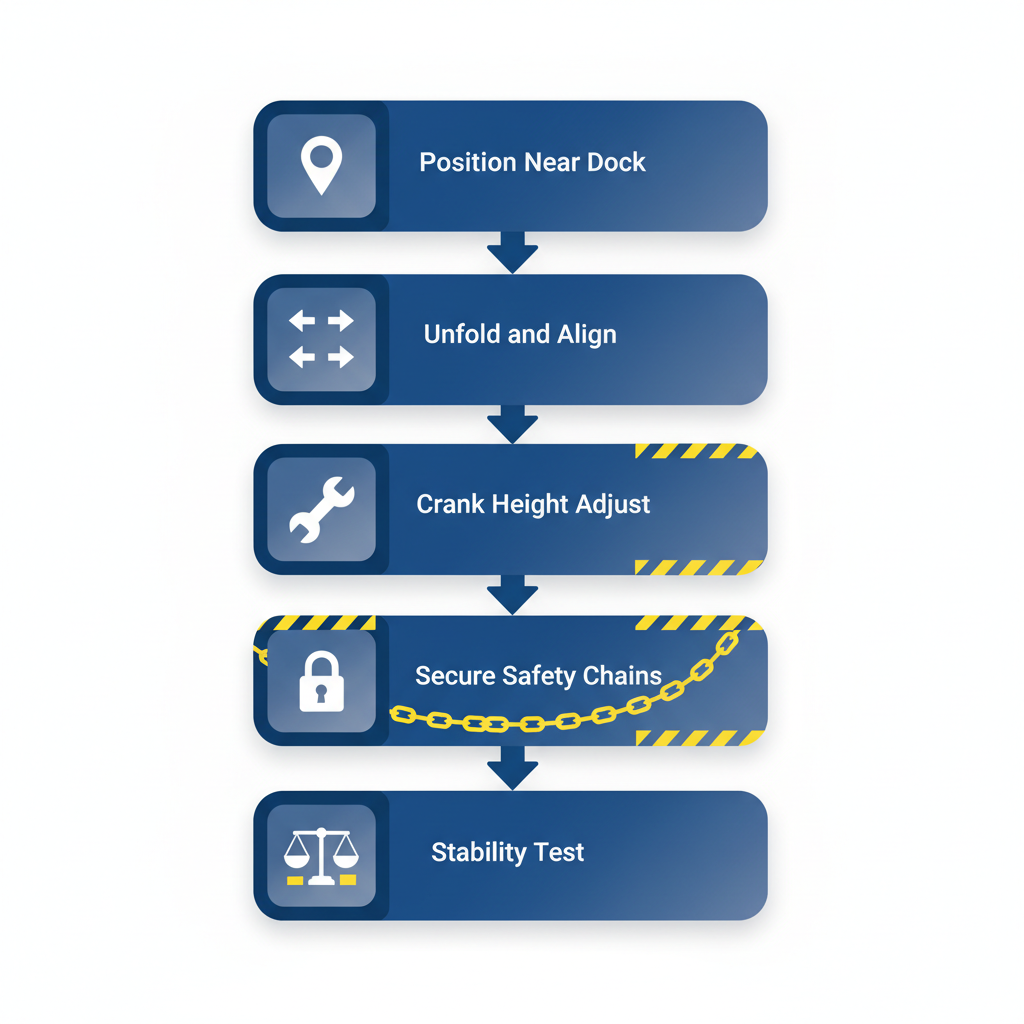
Step-by-step vertical flowchart for yard ramps operational setup
Following proper setup, operators can transition smoothly to loading activities, where the ramp’s adjustable loading bridges support consistent workflow.
Integration with Forklift Workflows
Integrating yard ramps into forklift operations optimizes loading and unloading by eliminating the need for fixed docks. Portable yard ramps allow forklifts to approach from the ground, ascend the ramp at a controlled angle, and transfer pallets directly into trailers, reducing turnaround times in warehousing and distribution centers.
Key dynamics include maintaining a steady speed during ascent to prevent tipping; operators should approach the ramp perpendicularly to ensure even weight distribution. Capacity considerations are critical–our ramps support up to 20,000 pounds, but always match the forklift’s load to the ramp’s rating to prevent overloads, aligning with OSHA 1926.250 requirements for floor load limits and secure bridging.
In practice, the ramp serves as a seamless dock-to-ground connector, enabling bidirectional traffic without repositioning. Compared to stationary ramps, portable yard ramps offer flexibility for temporary sites or varying truck heights, though they require periodic repositioning. We cover the entire USA with models designed for such versatility, ensuring reliable performance in diverse logistics scenarios.
Safety protocols, including wearing high-visibility gear and using spotters for blind spots, further enhance integration. This approach not only boosts productivity but also complies with regulatory standards for materials handling.
Maintenance for Used and New Ramps
Regular maintenance extends the lifespan of yard ramps, whether new or used, by identifying wear early and preventing operational failures. For used yard ramps, start with a visual inspection of the frame for cracks, welds for integrity, and hydraulic systems for leaks–our pre-inspected mobile ramps undergo rigorous checks before sale.
Establish a routine checklist:
- Daily: Clean debris from the surface and inspect for loose bolts or damaged decking.
- Weekly: Lubricate the crank mechanism and test height adjustments for smooth operation.
- Monthly: Measure ramp angle and verify capacity plating remains legible, consulting OSHA 1926.250 for storage and handling upkeep.
- Annually: Engage certified technicians for load testing and structural evaluations.
New ramps benefit from the same schedule to maintain warranty coverage, focusing on corrosion prevention through galvanizing coatings. Addressing questions like inspecting used yard ramps for quality involves checking serial numbers against manufacturer records and load history. Affordable used options provide reliable performance when properly maintained, supporting cost-effective solutions for growing operations.
By adhering to these guidelines, facilities can ensure longevity and safety, tying directly into broader strategies for efficient materials handling.
Best Practices for Selecting Yard Ramps
Selecting the right yard ramp is essential for enhancing warehouse efficiency and safety. We suggest starting with a thorough evaluation of your operational needs to ensure the ramp aligns with your loading processes. By following these best practices, you can make informed decisions that support long-term productivity.
Assessing Warehouse Requirements
To choose the ideal yard ramp, begin by evaluating your warehouse’s specific demands. Measure dock heights accurately, typically ranging from 40 to 60 inches, to match ramp incline for safe forklift access. Assess load capacities based on average weights, aiming for options rated at least 20% above your maximum to accommodate growth.
Consider traffic volume and frequency of use; high-volume sites benefit from durable, high-capacity designs. We recommend creating a checklist:
- Dock height and available space
- Expected load sizes and forklift types
- Daily loading cycles and peak periods
- Surface conditions, including weather exposure
Incorporate yard ramps for sale into your planning to identify budget-friendly ramp buys that fit these criteria. This assessment ensures seamless integration into your operations, minimizing downtime and safety risks. Addressing these factors upfront prevents costly mismatches down the line.
Evaluating Options: New vs Used
When comparing yard ramps, weigh new against used models to balance cost and reliability. New ramps offer pristine condition and full manufacturer support, while used yard ramps provide immediate availability at reduced prices. Portable yard ramps stand out for their mobility, ideal for flexible loading zones.
The following table outlines key differences:
| Factor | New Yard Ramps | Used Yard Ramps |
|---|---|---|
| Initial Cost | Higher Investment | Budget-Friendly |
| Condition | Factory Fresh | Refurbished/Inspected |
| Longevity | Maximum Service Life | Dependent on Age/Use |
New options deliver long-term value through superior durability, but used alternatives suit budget-conscious operations if inspected professionally. Evaluate portable yard ramps for sites needing quick repositioning. Always verify load ratings and structural integrity to avoid hazards–consult us for site-specific advice.
Supplier Selection and Customization
Choosing a reliable supplier is crucial for quality and support. Look for providers with extensive experience, like Medlin Ramps, offering nationwide availability including yard ramps Texas. Prioritize those adhering to industry standards from organizations such as MHI, ensuring equipment procurement best practices like thorough inspections and transparent sourcing.
We suggest a supplier checklist:
- Proven track record, with 35+ years in material handling
- Customization capabilities for unique site needs, such as custom loading solutions
- Rental or rent-to-own options for flexibility
- Strong customer service and fast delivery across the USA
For specialized applications, opt for tailored designs to match exact dimensions and capacities. Do not exceed rated capacities–consult the manufacturer for site-specific load and installation requirements. Results vary by application, but selecting a trusted partner like us ensures durable, efficient solutions that cover the entire USA, one customer at a time.
Choosing the Right Yard Ramp Solution
When exploring yard ramps for sale, the key is aligning your needs with durable, efficient solutions that enhance warehouse operations. Heavy-duty steel construction offers unmatched strength and longevity, supporting high capacities up to 30,000 pounds while enabling seamless forklift access. Whether opting for new models, used yard ramps that provide cost savings, or rental options for flexibility, these ramps streamline loading and unloading processes.
Portable yard ramps stand out for their mobility, ideal for varying dock heights and temporary setups, while selection hinges on site-specific factors like ground conditions and traffic volume. By considering these elements, businesses can make informed choices that boost productivity without unnecessary expenses. We at Medlin Ramps, with over 35 years in the material handling industry, deliver nationwide support, including yard ramps Vermont, ensuring compliance with OSHA standards for safe materials handling and storage.
Our commitment to excellence means we cover the entire USA, one customer at a time. Choose cost-effective ramp choices that fit your budget and operations. Contact us today for personalized guidance on ideal loading equipment to elevate your efficiency and help lower ongoing operating costs.